Parenting Expert Practical, ‘No-Drama’ Ways to Rethink Discipline and Build Hope

NEWS RELEASE
April 17, 2026
For immediate release
Media contact: Cara Scarola Hansen
Center for Child Counseling Public Relations Counsel
cara@yourmissionmarketing.com

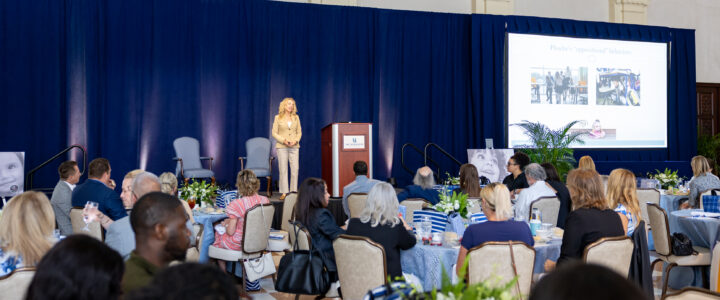
Dr. Tina Payne Bryson shared her expertise on supporting children’s emotional growth at Center for Child Counseling’s 2026 Lead the Fight kickoff luncheon.

World-renowned parenting expert and clinician Dr. Tina Payne Bryson emphasized the “no-drama” way of disciplining children at Center for Child Counseling 2026 kick-off Lead the Fight luncheon on April 9, 2026, at The Breakers. 140 statewide leaders and community members left with practical, tangible knowledge of how to rethink discipline and support children’s emotional and relational development.

Dr. Bryson, a New York Times bestselling author, shared her expertise on responding to others with curiosity and looking at behavior as communication. 

“When we invoke curiosity in our own brains, or in someone else’s brain–whether that’s a teacher, or a parent, or a kid–it activates the pre-frontal cortex and helps us be better problem-solvers, more empathetic, and more integrated in our brains, so we are less likely to be reactive,” explained Dr. Bryson.  

She helped the audience understand that discipline does not have to be punitive, but it should teach and build skills. 

“When we say ‘yes’ to a child, we can still say ‘no’ to a behavior…the reason we address childhood behaviors is because we are trying to build skills so that they become self-disciplined and they are good people who do the right thing, even when no one is looking.”

Dr. Bryson equated behavior to communication: “If we think about how behavior is communication, about what skills they don’t yet have, then it’s easy to figure out what to do in the name of discipline…we have to think about the struggles themselves as the opportunities.” 

She gave the example of a child who blurts out in class every time before having to choose a group. While the teacher thought this child was being disrespectful and oppositional, the behavior stemmed from not having the appropriate skills to join peers. When taught how to ask “Can I join you,” the behavior stopped. 

Since most of what is done in the name of discipline does not make a lot of sense, “we want to rethink what we are doing and why we’re doing it.”

Questions to consider when rethinking a discipline strategy, include: Does it build the relationship? Is the response counter-productive? Is it the right time? Is it building regulation and/or skills? Is the way I’m handling this moving the child closer to or further away from doing better next time? 

She advised, “Pause before you respond to the behavior. Then ask, ‘Is the way I’m about to respond going to make it more likely they can do better the next time or not?’”

Dr. Bryson shared that the biggest predictor for how well kids turn out is that they have “secure attachment” to at least one person who gives them repeated experiences of feeling safe, seen, soothed, and secure.

She concluded, “When children are at their worst, that’s when they most need connection…it’s about relationship and safety first. Their relationship with you. What you do matters. And when you take that and combine it in rethinking challenging behaviors as opportunities to build skills and teach, we’re going to be building brains, building relationships, and generationally changing the world in ways it needs to be changed.”

Dr. Bryson’s transformative work aligns with Center for Child Counseling’s HOPE framework–healthy outcomes from positive experiences–which marks the foundation of everything CFCC does. The Center is not just responding to crisis, it is walking alongside children, families, schools, organizations, and congregations building hope throughout Palm Beach County: it serves as a nationally-recognized model for fighting ACEs (adverse childhood experiences). 

At the luncheon, the Center formally announced the availability of its updated “A Way of Being with Children” manual–an early childhood curriculum grounded in trauma-informed and HOPE-informed care. The manuel is a practical, research-based resource for every adult who works or cares for children.

A Way of Being with Children centers relationship and regulation, what matters most, and reminds us that how we are with children matters as much as what we do. Rooted in science, and rich with practical tools, it offers a shared and essential framework for parents and professionals supporting children ages 0–5,” endorsed Dr. Bryson. 

CFCC’s Chief Executive Officer Renée Layman thanked Dr. Bryson for bringing her brilliance to Palm Beach County, “What you have given us is…a lens we now carry into every interaction we have with a child from this moment forward…We do not have to wait for a child to fall apart to start helping them. Prevention is cheaper than correction. HOPE is more powerful than despair…Thank you for being here. Thank you for leading the fight.” 

Attendees left better equipped to foster connection, understanding, well-being, and HOPE in children, families, and communities.

The event was chaired by Kathy Leone and emceed by WPTV 5’s Ashley Glass. Donors and corporate sponsors that made this important conversation possible include: The Breakers Palm Beach, Searcy Law, Children’s Services Council of Palm Beach County, Keating Moore Construction, Sage View, WPTV 5, Stephens & Stevens Marital & Family Law, Valley Bank, Kathy Leone, Jodie & Jeff Petrone, and a visionary family foundation. 

CFCC’s Fighting ACEs initiative to build trauma-informed communities is made possible with the generous support of Quantum Foundation, Community Foundation for Palm Beach and Martin Counties, and private donors.

For more information on CFCC and how it is bringing science, compassion, and community together to prevent adversity, strengthen resilience, and build a safer, healthier future for children and families, visit: centerforchildcounseling.org/leadthefight.  

###
New Grant Gives HOPE to Parents and Children in Palm Beach County

NEWS RELEASE
October 18, 2024
For immediate release
Media contact: Cara Scarola Hansen
Center for Child Counseling Public Relations Counsel
cara@yourmissionmarketing.com

New Grant Gives HOPE to Parents and Children in Palm Beach County
Center for Child Counseling promotes healthy outcomes and positive experiences within families with a $130,000/year grant from the Youth Services Department. 

Local nonprofit Center for Child Counseling (CFCC) recently secured funding from Palm Beach County Youth Services Department to promote HOPE–healthy outcomes from positive experiences–within families. The $130,000 award per year over the next three years for Project Promoting Family HOPE will be used to offer parent/caregiver education and support to address the impact of adverse childhood experiences (ACEs), trauma, and toxic stress. By integrating prevention and early intervention at the family level, parents and caregivers can create safe, supportive environments that promote resilience, healthy relationships, and well-being. 

According to CFCC CEO Renée Layman, “HOPE is a strategy. Without it, we give in, give up, and believe this world is good enough for our kids.”

Positive connection is at the core of CFCC’s work and mission to build the foundation for playful, healthful, and hopeful living for children, families, and communities. Through prevention and early intervention, the agency strives to address the root causes of mental health struggles early on, to mitigate crises before they escalate. The Center is fighting ACEs and the youth mental health crisis with the best weapon possible: positive childhood experiences (PCEs) grounded in trauma-informed positive relationships and support. 

Project Promoting Family HOPE provides two-generation interventions aimed at promoting positive parenting, nurturing relationships, safe environments, and opportunities for social and emotional development. Adults who report higher numbers of PCEs are less likely to experience depression or poor mental health, and adolescents who have positive experiences during childhood are less likely to develop mental health problems later in life. 

This project focuses on enhancing the capacities of people who live and work with children to mitigate the impact of ACEs and promote HOPE. Evidenced-based strategies and education will focus on youth and families exposed to a variety of stressors, including: harsh parenting strategies, including abuse; domestic and/or community violence; caregiver arrest, incarceration, or absence from the home; caregiver or family history of addiction, substance misuse, mental illness; homelessness or lack of housing stability; family member’s chronic illness or sudden death; separation from parents or placement in the foster care system. 

“No family should shoulder the burden of parenthood alone, especially in a world that feels increasingly disconnected, with mounting economic and political stress. Our data reflects high levels of parent/caregiver dysregulation. But there is hope. All parents can benefit from a listening ear, a guiding hand, or simply a respite from the daily grind of parenthood. Our goal is to give parents this hope so that they can be the positive force in their children’s growth. So their kids can grow and develop into healthy, resilient adults,” stated Layman. 

Through the PBC Youth Services Department grant, the Center is able to provide culturally and linguistically appropriate parent/caregiver and professional education through various curricular materials and workshops. For instance, A Way of Being with Children: A Trauma-Informed Approach to Building Safety and Resilience, is a new research-based curriculum developed for adults who work or live with elementary-aged children and includes a 140-page manual with access to tip sheets, videos, and workshops. This curriculum is being delivered live, in-person or via Zoom, and has content available on CFCC’s learning management system at bekidsafe.org. Educational materials and workshops are offered in English, Spanish, Portuguese, and Haitian Creole

For more information, visit centerforchildcounseling.org. 

About Center for Child Counseling
Since 1999, Center for Child Counseling has been building the foundation for playful, healthful, and hopeful living for children and families in Palm Beach County. Its services focus on preventing and healing the effects of adverse experiences and toxic stress on children, promoting resiliency and healthy family, school, and community relationships. For more information visit, centerforchildcounseling.org/. 

Twitter: @ChildCounselPBC Facebook: @CenterforChildCounseling Instagram: @childcounselpbc

###

Youth mental health, an echo pandemic, escalates demand for supportive adults

NEWS RELEASE

June 23, 2021
For immediate release
Media contact: Cara Scarola Hansen
Center for Child Counseling Public Relations Counsel
cara@yourmissionmarketing.com
561-632-6747 

Youth mental health, an echo pandemic, escalates demand for supportive adults

Online training and public health campaign gives adult caregivers a new way to simply ‘be’ around children and build a trauma-informed community

While COVID-19 physically impacts some, it has impacted mental health on a much broader scale. A recent Centers for Disease Control and Prevention (CDC) study reported a 31% increase in the proportion of mental health–related emergency department visits for youth aged 12–17 years during 2020 as compared to 2019. 

Stress-induced cognitive and physical impairments and toxic stress related to the unpredictability of the COVID-19 pandemic has been prolonged and exaggerated. Another recent survey found that 64% of teens believe “the experience of COVID-19 will have a lasting impact on their generation’s mental health,” and 6 in 10 teens say their sources of support are harder to reach than normal.

Youth mental health issues have caused an echo pandemic of increased incidences of depression, anxiety, and suicide, escalating the demand for both therapists and other supportive adults who are mentally healthy themselves.

The science of early adversity proves that in the absence of protective relationships, toxic stress in childhood can change the architecture of the developing brain. Adverse childhood experiences (ACEs) impact everything–classroom behaviors, learning and comprehension, the ability to self-regulate–and can dramatically heighten the risk for future mental and physical health concerns. 

Center for Child Counseling (CFCC) recently launched “A Way of Being with Children: A Trauma-Informed Approach to Building Resilience.” This online training for parents, teachers, childcare workers, or anyone who regularly interacts with children and families, along with a public health campaign, aim to build a more trauma-informed community so that children can grow up with adults who understand the impact of trauma and adversity and do not risk re-traumatizing children through their words or actions.

Being trauma-informed involves understanding, sensitivity, and a deep knowledge of how trauma can affect a child’s growing brain and potentially result in lifelong physical and mental health implications.

The 5.5 hour online course, accompanied by a spiral-bound manual with over 80 pages of practical advice and technique-building exercises, introduces a new way for adults to simply “be” around children–a better way that can help bring families closer together and make the time spent with children happier and more fulfilling. Based on decades of research into childhood brain development and the expertise of countless childcare workers and professional therapists, “A Way of Being” aims to create family and school relationships where children feel accepted and parents and teachers feel empowered. 

Center for Child Counseling was founded in 1999 with the vision that every child will grow up feeling safe and nurtured in communities where they can thrive. CFFC’s work started in Palm Beach County, Florida, childcare centers, providing therapeutic support for young children experiencing adversity and trauma, while equipping their caregivers with effective practices for building social-emotional well-being and resilience. 

The Center’s work has expanded beyond childcare centers to now working with children birth to age 18 in schools, the community, and the child welfare system. A primary goal is to help providers, educators, caregivers, and child-serving systems to shift their everyday ‘way of being’ with children, families, and communities who have experienced adversity and trauma from a “What’s wrong with you?” to a “What happened to you?” approach. Using a prevention and healing-centered lens, CFCC focuses on changing the systems and practices that keep adversity and trauma firmly in place. 

For over two decades, CFCC has worked in partnership with families and communities, interacting with children in their most natural state of being: when they are at play. “A Way of Being” was developed based on this work and research over the last twenty years–grounded in science, guided by the voices of the families helped, and founded on best-practice principles using a trauma-informed, racial-equity lens. 

In conjunction with the online training, the Center has also launched a public health campaign on social media–including Facebook, Twitter, Instagram, LinkedIn, and YouTube–promoting this new way of being. The campaign aims to build awareness and education of the positive ways that adults can interact with the children in their lives to build lifelong resilience. 

“The goal is for all community members to understand and own the idea that we each have a stake and role in child and family wellbeing. The need for adults to provide positive mental health support has significantly increased during COVID-19. Children have tremendous potential–which our society needs–and which we have a shared obligation to foster and protect,” said Reneé Layman, chief executive officer of Center for Child Counseling. 

“A Way of Being with Children” online training and public health campaign has been made possible through the partnership and support of  Florida Blue Foundation, Early Learning Coalition of Palm Beach County, and Children’s Services Council of Palm Beach County. Grants from these funding partners make the training (live and online) available to childcare centers and public schools in Palm Beach County at no cost.

For more information on “A Way of Being” or to register for the online training or purchase the manual, visit: centerforchildcounseling.org/awayofbeing. For more information on training options for childcare centers, schools, or organizations, contact: info@centerforchildcounseling.org.

About Center for Child Counseling
Since 1999, Center for Child Counseling has been building the foundation for playful, healthful, and hopeful living for children and families. Its services focus on preventing and healing the effects of adverse experiences and toxic stress on children, promoting resiliency and healthy family, school, and community relationships. 

Twitter: @ChildCounselPBC Facebook: @CenterforChildCounseling Instagram: @childcounselpbc

###

Online training and public health campaign to transform adult caregivers

NEWS RELEASE

May 26, 2021
For immediate release
Media contact: Cara Scarola Hansen
Center for Child Counseling Public Relations Counsel
cara@yourmissionmarketing.com
561-632-6747 

Center for Child Counseling launches online training and public health campaign to transform adult caregivers 

A new way to simply ‘be’ around children and build a trauma-informed community

Center for Child Counseling recently launched “A Way of Being with Children: A Trauma-Informed Approach to Building Resilience.” This online training for parents, teachers, childcare workers, or anyone who regularly interacts with children and families, along with a public health campaign, aim to build a more trauma-informed community so that children can grow up with adults who understand the impact of trauma and adversity and do not risk re-traumatizing children through their words or actions.

Being trauma-informed involves understanding, sensitivity, and a deep knowledge of how trauma can affect a child’s growing brain and potentially result in lifelong physical and mental health implications.

The 5.5 hour online course, accompanied by a spiral-bound manual with over 80 pages of practical advice and technique-building exercises, introduces a new way for adults to simply “be” around children–a better way that can help bring families closer together and make the time spent with children happier and more fulfilling. Based on decades of research into childhood brain development and the expertise of countless childcare workers and professional therapists, “A Way of Being” aims to create family and school relationships where children feel accepted and parents and teachers feel empowered. 

Center for Child Counseling was founded in 1999 with the vision that every child will grow up feeling safe and nurtured in communities where they can thrive. CFFC’s work started in Palm Beach County childcare centers, providing therapeutic support for young children experiencing adversity and trauma, while equipping their caregivers with effective practices for building social-emotional well-being and resilience. 

The Center’s work has expanded beyond childcare centers to now working with children birth to age 18 in schools, the community, and the child welfare system. A primary goal is to help providers, educators, caregivers, and child-serving systems to shift their ‘way of being’ with children, families, and communities who have experienced adversity and trauma from a “What’s wrong with you?” to a “What happened to you?” approach. Using a prevention and healing-centered lens, CFCC focuses on changing the systems and practices that keep adversity and trauma firmly in place. 

The science of early adversity proves that in the absence of protective relationships, toxic stress in childhood can change the architecture of the developing brain. Adverse childhood experiences (ACEs) impact everything–classroom behaviors, learning and comprehension, the ability to self-regulate–and can dramatically heighten the risk for future mental and physical health concerns. 

For over two decades, CFCC has worked in partnership with families and communities, interacting with children in their most natural state of being: when they are at play. “A Way of Being” was developed based on this work and research over the last twenty years–grounded in science, guided by the voices of the families helped, and founded on best-practice principles using a trauma-informed, racial-equity lens. 

“A Way of Being” represents a shift in working with children and each other. It provides the foundation for shifting everyday practice to support children’s social-emotional well-being to build lifelong resilience. 

In conjunction with the online training, the Center has also launched a public health campaign on social media–including Facebook, Twitter, Instagram, LinkedIn and YouTube–promoting this new way of being. The campaign aims to build awareness and education of the positive ways that adults can interact with the children in their lives. 

“The goal is for all community members to understand and own the idea that we each have a stake and role in child and family wellbeing. Children have tremendous potential–which our society needs–and which we have a shared obligation to foster and protect,” said Reneé Layman, chief executive officer of Center for Child Counseling. 

“A Way of Being with Children” online training and public health campaign has been made possible through the partnership and support of  Florida Blue Foundation, Early Learning Coalition of Palm Beach County, and Children’s Services Council of Palm Beach County.

For more information on “A Way of Being” or to register for the online training or purchase the manual, visit: centerforchildcounseling.org/awayofbeing. For more information on training options for childcare centers, schools, or organizations, contact: dominika@centerforchildcounseling.org.

Since 1999, Center for Child Counseling has been building the foundation for playful, healthful, and hopeful living for children and families in Palm Beach County. Its services focus on preventing and healing the effects of adverse experiences and toxic stress on children, promoting resiliency and healthy family, school, and community relationships.

PHOTO ID:

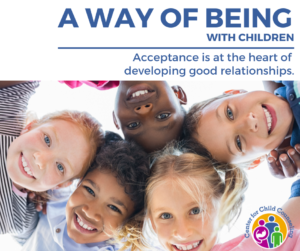
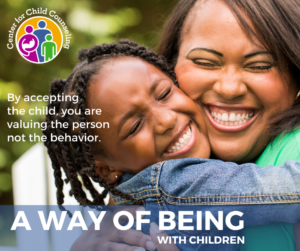
Sample of public health approach awareness campaign being used on social media.

###

Social media & sharing icons powered by UltimatelySocial