
Turning Data into Impact
Center for Child Counseling's Data Dashboard is not a report — it is a real-time intelligence system that identifies where children are hurting and directs resources there before it's too late. Powered by centralized intake, geo-mapping, and rapid feedback cycles, our Data to Action framework is transforming how children's mental health services are delivered across Palm Beach County.
From Data to Action
Centralized Intake
Every referral, screening, and service connection flows through a single system — ensuring no child falls through the cracks and every family is triaged to the right level of care.
Geo-Mapping
Real-time geographic mapping pinpoints neighborhood-specific needs, identifying where children are most at risk and directing prevention, early intervention, and treatment resources precisely where they are needed most.
Rapid Feedback Cycles
Data is reviewed monthly through our formative evaluation process, generating actionable insights that continuously improve implementation of programs and interventions across all service levels.
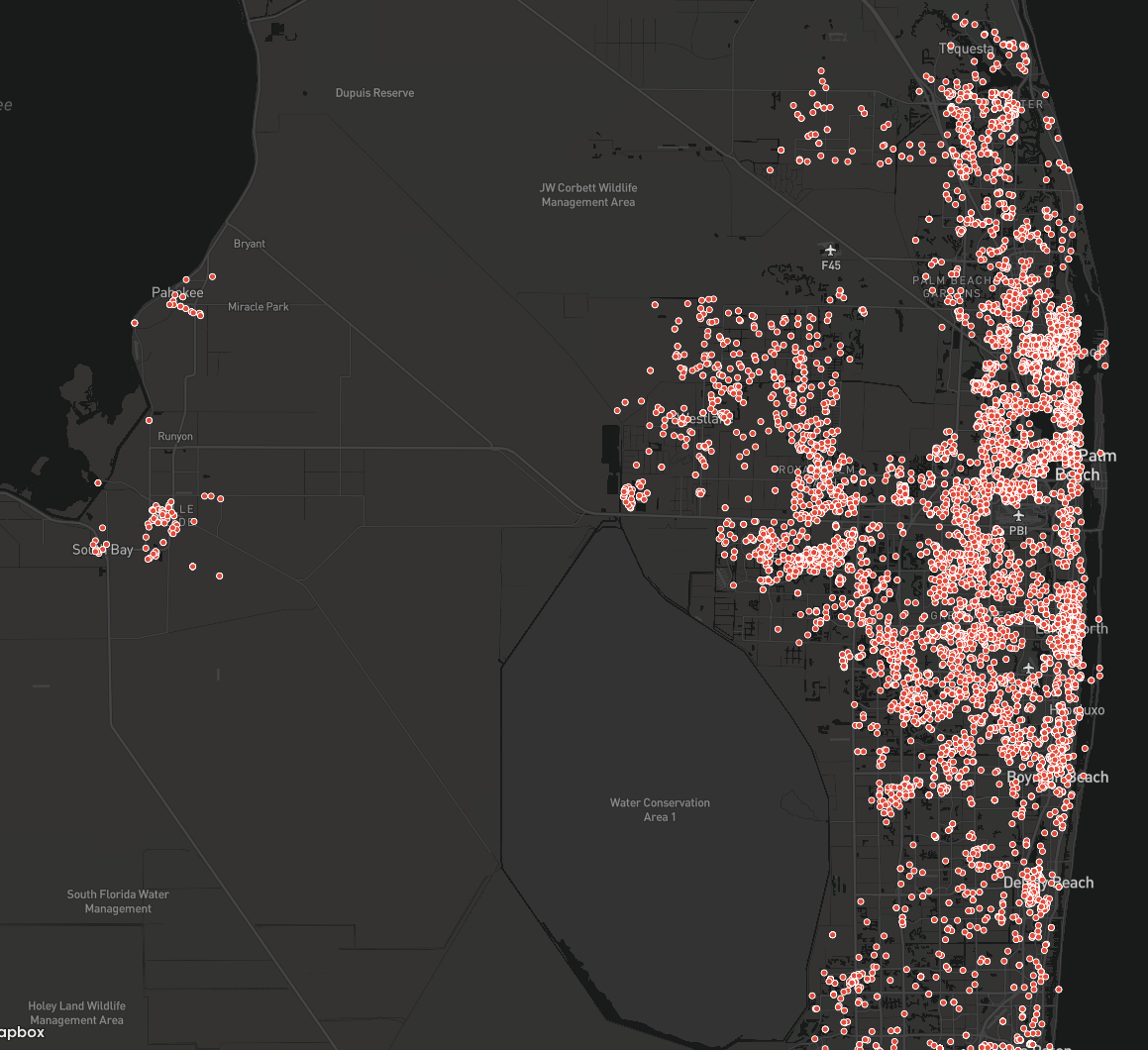
Real-time geo-mapping identifies neighborhood-specific needs across Palm Beach County, directing prevention, early intervention, and treatment resources precisely where children and families need them most.
"You don't have to wait for a child to fall apart emotionally before you do something."
How the Dashboard Works
Family Connects
Referral, appointment request, or community contact enters the system
Screening & Triage
Intake team screens, identifies needs, and triages to the right level of care
Geo-Mapping
Location data builds a real-time map of community need and service access
Service Delivery
Prevention, consultation, early intervention, or treatment delivered with fidelity
Outcomes & Action
Data reviewed monthly, insights drive program improvements and resource allocation
Screening & Assessment Tools
What the Dashboard Powers
Evaluation Framework
Our evaluation framework provides systematic assessment of every program's design, activities, and outcomes. With oversight from our Data Committee, we determine how programs are performing, whether they are achieving objectives, and where improvements are needed.
Program data is reviewed monthly as part of our formative evaluation process. The plan is responsive to program changes and shifting priorities, with revisions as needed. All interventions are based on evidence-based practices and guided by youth and family voice and choice.
Research Partnerships
Our Data Committee is chaired by our Chief Quality Officer and includes Dr. Eugenia Millender, who brings expertise in community trauma and research. This relationship includes support from Florida State University's Center for Population Sciences and Health Equity and a formal Data Sharing Agreement to analyze short- and long-term program outcomes.
Our Continuous Quality Improvement Committee oversees all evaluation procedures, ensuring fidelity to evidence-based interventions through program manuals, peer review, supervision, and fidelity assessment tools.
Service Responsiveness
Improve service access with timely follow-up and consistent responsiveness to families, community partners, and organizations.
Service Effectiveness
Enhance specialized training, increase therapeutic resources, and promote best practice models and culturally competent care.
Service Efficiency
Create strong feedback loops from all stakeholders to improve internal processes and strengthen collaborative relationships.
Partner & Funder Portal
Our funding partners and community collaborators will soon have direct access to real-time impact data, program outcomes, and community-level insights through a secure, dedicated portal.
Invest in Innovation
The Data Dashboard represents a new standard for children's mental health organizations — using technology, data, and evidence to reach more children faster and more effectively than ever before. Your support makes this possible.