Supporting Educators.
Strengthening Classrooms.
Helping Young Children Thrive.
The Early Childhood Social-Emotional Supports (ECSES) program partners with childcare providers to strengthen the social-emotional and behavioral well-being of children from birth to five. We work right inside childcare settings to support educators, enrich classroom environments, and build strong partnerships with families through prevention, early intervention, and relationship-based consultation.
Strengthening the Adults Who Shape Early Childhood
Early childhood educators are increasingly supporting children with complex social-emotional and behavioral needs while managing busy classrooms. ECSES was created to give educators practical, individualized support, building capacity so the strategies remain long after our consultation concludes.
Meeting Every Classroom Where It Is
ECSES support flexes to fit each classroom's needs, from strengthening everyday practices for all, to individualized consultation for children who need more.
Universal Supports
- Classroom observations and feedback
- Consultation and coaching
- Professional development
- Support with climate, routines, transitions, and social-emotional teaching
- Preventive strategies that strengthen everyday practice
Targeted Supports
- Targeted classroom and child strategies
- Small Group Play for social-emotional skill building
- Social-emotional skill-building activities
- Emotional regulation and peer relationship supports
- Classroom support plans
- Family collaboration and ongoing coaching
Intensive Supports
- Individual child observations
- Individualized child, family, and classroom plans
- Intensive educator consultation and implementation support
- Family consultations and problem-solving
- Coordination with community providers and referrals
- Frequent follow-up and progress monitoring
Small Group Play
Small Group Play offers targeted social-emotional skill building for children identified through observation and screening. Facilitated by our Developmental Specialists in a supportive, play-based environment right inside your childcare program, these groups help children grow the skills that set the stage for connection, confidence, and learning.
A Collaborative, Relationship-Based Process
Each participating program is paired with an ECSES Developmental Specialist who partners with teachers and administrators through an ongoing consultation process. Grounded in our A Way of Being with Children framework and a HOPE-informed, trauma-responsive approach, our work is collaborative and strengths-based, centered on relationships and designed to support and empower the educators who shape children's earliest experiences.
Initial Partnership
We meet with program leadership to understand the strengths, priorities, and classroom needs that will shape our work together.
Classroom Observation
We observe routines, interactions, and the learning environment to identify strengths and opportunities for growth.
Collaborative Planning
Together we develop a Quality Improvement Plan with practical goals, action steps, and classroom-focused strategies.
Consultation & Coaching
We provide reflective consultation, modeling, coaching, problem-solving, and individualized classroom support.
Family Partnership
We support educators in strengthening communication with families and connecting them to resources when needed.
Progress Monitoring
Through follow-up observations, reflective conversations, and ongoing coaching, we monitor growth and adjust supports over time.
Tools for Every Caregiver
Every childcare center, family, and educator is welcome to these free, evidence-based resources — grounded in A Way of Being with Children and our HOPE, trauma-informed approach. Filter by who you are or what you need.
Co-Regulation Made Simple
How to lend your calm so a child can find theirs — the single most important skill a caregiver can offer.
Download Tip Sheet →Responding to Challenging Behavior
Read the need beneath the behavior and respond in ways that teach, connect, and build trust.
Download Tip Sheet →Connection Is Protection
Simple, everyday ways to build the safe, caring relationships that protect a child through stress.
Download Tip Sheet →Play Is Healing
Why play is how young children process their world, express big feelings, and build resilience.
Download Tip Sheet →Predictability and Routines
How steady routines help a child feel secure enough to explore, learn, and grow.
Download Tip Sheet →Transitions and Challenging Moments
Getting through drop-offs, endings, and other tricky moments with less stress.
Download Tip Sheet →Creating Nurturing Environments
Shaping spaces at home and in the classroom that feel safe, calm, and welcoming.
Download Tip Sheet →Emotional Climate
Setting the emotional tone that lets children settle, feel safe, and thrive.
Download Tip Sheet →Ways to Play
Child-centered play, sensory activities, art, and nature play to strengthen the parent-child bond.
Explore Activities →A Way of Being Video Library
Short, expert-led videos on connection, co-regulation, play, and HOPE-informed strategies for young children. Each one offers practical tools you can use today.
Building Connection & Resilience
Discover how everyday interactions between a caring adult and a young child build the foundation for lifelong social-emotional health.
Supporting Big Feelings
Practical, gentle ways to help young children move through big emotions — and how your calm becomes their calm.
Connection Before Correction
Why children calm down and learn best when they feel connected first — and how to lead with relationship in every interaction.
The Power of Play
How play helps children make sense of their world, process feelings, and build the skills they will use for a lifetime.
The Power of Empathy
When you slow down and truly tune in to a young child, something powerful happens: they feel understood. Empathy isn't about having the right words — it's about being present enough to notice what a child is feeling and letting them know they're not alone in it.
A Way of Being with Children
Everything we do begins here. A Way of Being with Children is more than a program or a curriculum. It is a way of showing up for children, grounded in the science of the developing brain and the belief that safe, caring relationships are what help children heal and thrive. At its core are the four things every child needs from the adults in their life, what Dr. Tina Payne Bryson calls being Safe, Seen, Soothed, and Secure.
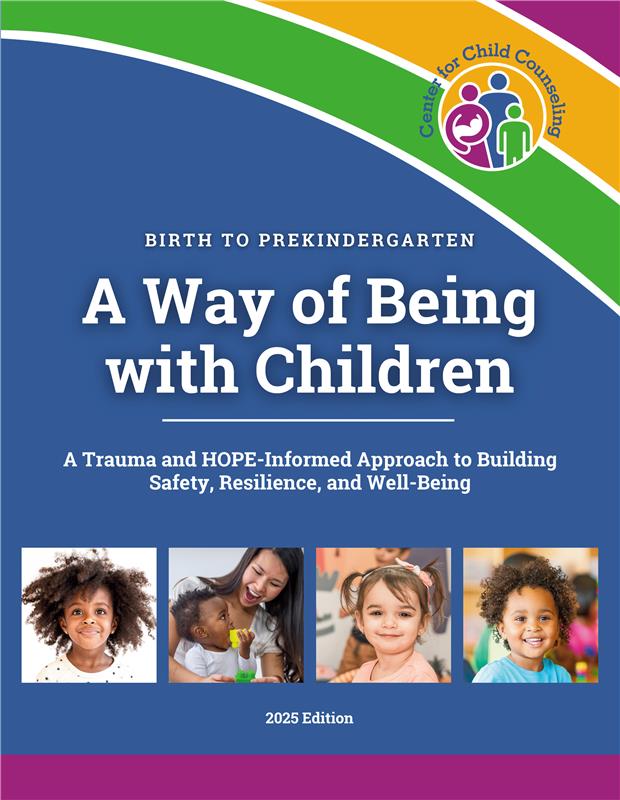
That simple shift changes everything. When the adults in a child's life lead with connection, curiosity, and trust, children feel safe enough to grow. A Way of Being gives educators and caregivers a shared language and practical tools to meet children with understanding, especially in the hardest moments.
Videos
A growing library of short, expert-led videos on child development, connection, play, and HOPE-informed strategies.
Watch Videos →Tip Sheets
Practical, one-page guides on connection, regulation, play, behavior, and routines, ready to download and use.
Browse Tip Sheets →On-Demand Workshops
Self-paced workshops on prevention, child development, and trauma-informed care, available anytime on BeKidSafe.org.
Visit BeKidSafe.org →Questions About a Child? Just Ask.
The HOPE Assistant is a free, friendly guide to trauma- and HOPE-informed care, available anytime a question comes up. Ask about big feelings, bedtime, tantrums, transitions, or simple ways to connect with a child.
Its guidance is grounded in HOPE — Healthy Outcomes from Positive Experiences — the same approach behind A Way of Being with Children and the ECSES program.
Chat with the HOPE Assistant →Frequently Asked Questions
- Big feelings, tantrums, and meltdowns
- Biting, hitting, and other challenging behaviors
- Smoother transitions and predictable routines
- Circle time and group engagement
- Creating calming, welcoming classroom spaces
- Helping children build self-regulation and coping skills
- Strengthening teacher-child relationships
Have Questions About ECSES?
The referral process for this program is still being developed. If you have a question that isn't covered in the FAQs above, we would love to hear from you.
The Early Childhood Social-Emotional Supports program is made possible through the generous support of the Children's Services Council of Palm Beach County, whose investment helps build resilient classrooms and lays the foundation for lifelong social-emotional well-being.
Keep Exploring, Keep Connecting
Every childcare center, family, and educator is welcome to our free, HOPE-informed resources, no partnership required. Start with our brand-new feelings hub for children and the grown-ups who care for them, or dive into the full early childhood collection.