

What Children Really Need to Feel Safe

What Children Really Need to Feel Safe — Center for Child Counseling
A Way of Being with HOPE — Article 2

What Children Really Need to Feel Safe

It's not what you think
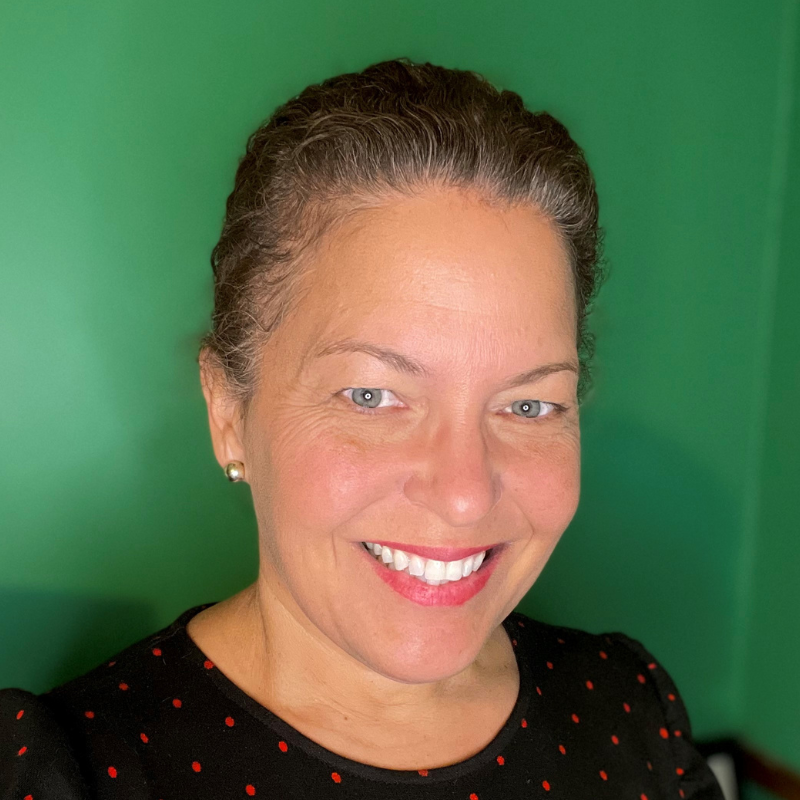
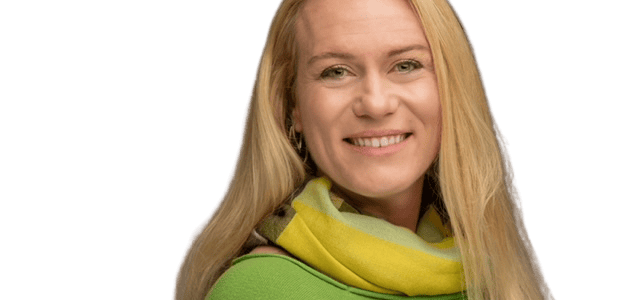
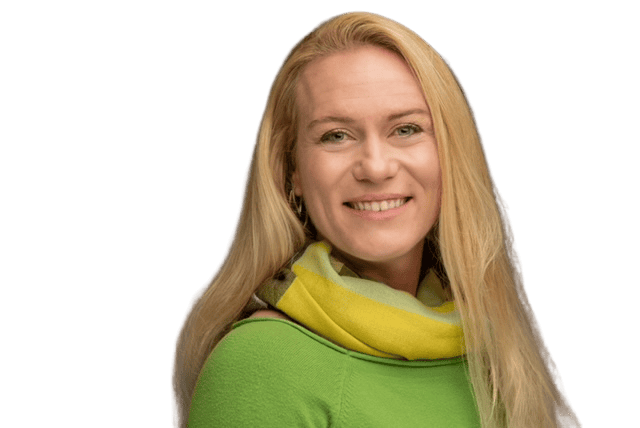
Renée Layman
Renée Layman
President & CEO · HOPE Champion

We lock the doors. We buckle the seatbelts. We childproof the cabinets. We do everything we can to keep our children physically safe. But the kind of safety that shapes a child's brain, behavior, and future has almost nothing to do with locks — and everything to do with relationships.

Safety, for a child's developing nervous system, isn't about the absence of danger. It's about the presence of connection. A child who feels emotionally safe — who knows that a trusted adult will be there, will notice them, will help them when things feel overwhelming — develops the neural architecture for learning, emotional regulation, and resilience.

A child who doesn't feel that safety? Their brain stays in survival mode. It doesn't matter how good the school is or how structured the routine — a brain on alert can't learn, can't connect, and can't grow the way it's designed to.

The Four S's: What Every Child Needs

Dr. Tina Payne Bryson — the internationally renowned psychotherapist, bestselling author, and keynote speaker at our Lead the Fight initiative — describes four essential experiences that every child needs from their caregivers. She calls them the Four S's:

Dr. Tina Payne Bryson's Four S's
🛡️
Safe
Protected from harm — including emotional harm from the people they depend on
👁️
Seen
Understood for who they really are — their inner life acknowledged and valued
🤲
Soothed
Helped to manage distress when things feel too big — not left alone with overwhelming feelings
💚
Secure
Confident that their caregiver will be there consistently — creating a stable base to explore from

When a child consistently experiences these four things, something profound happens: they develop what researchers call secure attachment. And secure attachment isn't just a nice-to-have — it's the single strongest predictor of a child's ability to handle stress, form healthy relationships, and thrive throughout their life.

What This Looks Like in Real Life

Attachment theory can sound abstract. But in practice, it shows up in the smallest, most ordinary moments — the ones you might not even think about.

Safe
Your child spills their juice and you say, "Oops, let's clean it up together" instead of yelling. They learn that mistakes don't lead to fear.
Seen
Your daughter seems quiet after school. Instead of asking "How was your day?" (and getting "fine"), you say, "You seem like something's on your mind. Want to tell me about it?" She learns her inner world matters.
Soothed
Your toddler is screaming because they can't have a cookie before dinner. Instead of logic or lectures, you get down to their level and say, "I know. You really wanted that cookie. That's hard." They learn that big feelings don't have to be faced alone.
Secure
You drop your child off at a new school and they look back at you. You smile and wave. They know you'll be there at pickup. They walk in with confidence — not because they're not nervous, but because they trust you'll return.

Why This Matters for the Brain

When a child feels safe, seen, soothed, and secure, their nervous system can shift from survival mode to learning mode. The stress response calms. The prefrontal cortex — the part of the brain responsible for problem-solving, empathy, emotional regulation, and decision-making — comes online.

But when a child chronically doesn't feel safe — even if they're physically safe — their brain stays wired for protection. The alarm system stays on. Cortisol stays elevated. And the parts of the brain that handle learning, connection, and emotional growth don't develop the way they should.

A child's brain doesn't ask "Am I safe?" It asks "Does this person make me feel safe?" The answer shapes everything.

This is why the HOPE framework puts Relationships as the very first building block. Not environments. Not programs. Not curriculum. Relationships. Because without a safe, caring relationship at the center, nothing else works the way it should.

What About When You Get It Wrong?

Here's the part that matters most: you don't have to be perfect.

Research on attachment shows that parents don't need to get it right every time — they need to get it right about a third of the time. What matters even more than getting it right is what happens when you get it wrong. Can you repair?

"I'm sorry I snapped at you. That wasn't your fault. I was frustrated about something else." That sentence — offered sincerely — is more powerful than a hundred perfect moments. Because it teaches your child that relationships can bend without breaking. That mistakes are human. That love isn't conditional on perfection.

At Center for Child Counseling, we call this A Way of Being with Children — a way of showing up in relationship that's grounded in attachment science, brain development, and the HOPE framework. It's not about techniques. It's about presence.

💛
Have more questions about attachment, safety, or your child's development?
Ask our AI-powered HOPE Assistant — instant, personalized guidance grounded in our clinical expertise.
Try HOPE Assistant →

When a Child Needs More

For many children, a safe and responsive relationship with a caregiver is enough. But some children have experienced disruptions to that safety — through trauma, loss, neglect, domestic violence, or other adverse childhood experiences — that make it harder for them to trust, connect, and regulate.

That's when professional support can help. Programs like Child First (home-based services for families with children under 6), Infant Mental Health (specialized support for the earliest relationships), and our Child & Family Center (outpatient therapy for children and families) are all designed to rebuild the sense of safety that every child deserves.

If you're wondering whether your child might benefit from support, our What Does My Child Need? guided tool can help you find the right program for your family.

The Bottom Line

The most important thing you can give your child isn't a perfect home, a perfect school, or a perfect schedule. It's you — showing up, paying attention, repairing when things go sideways, and making sure they know, deep in their bones, that someone is there.

Safe. Seen. Soothed. Secure.

That's the foundation. Everything else builds from there.

Renée Layman
Renée Layman
President & CEO · Center for Child Counseling · HOPE Champion

Renée has led Center for Child Counseling since 2013, growing it from a small grassroots agency to one serving over 7,500 children annually across Palm Beach County. With nearly 30 years in children's mental health, she is a certified HOPE Champion through the HOPE National Resource Center at Tufts Medical Center, President of the Florida Association for Infant Mental Health, and author of the updated A Way of Being with Children PreK Manual.

Every Child Deserves to Feel Safe & Supported

Whether you're looking for resources, seeking professional support, or simply trying to understand what your child is going through — we're here to help.
CFCC Holds New Executive Office Open House in Palm Beach Gardens

NEWS RELEASE
June 26, 2026
For immediate release
Media contact: Cara Scarola Hansen
Center for Child Counseling Public Relations Counsel
cara@yourmissionmarketing.com

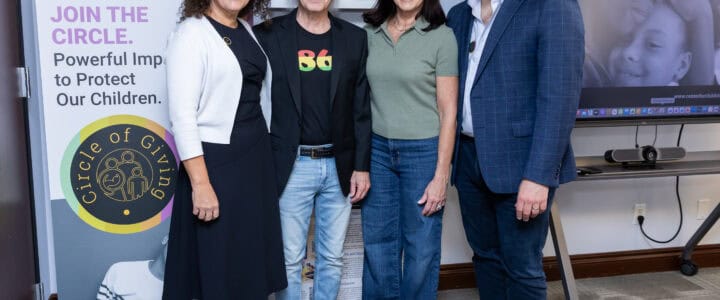
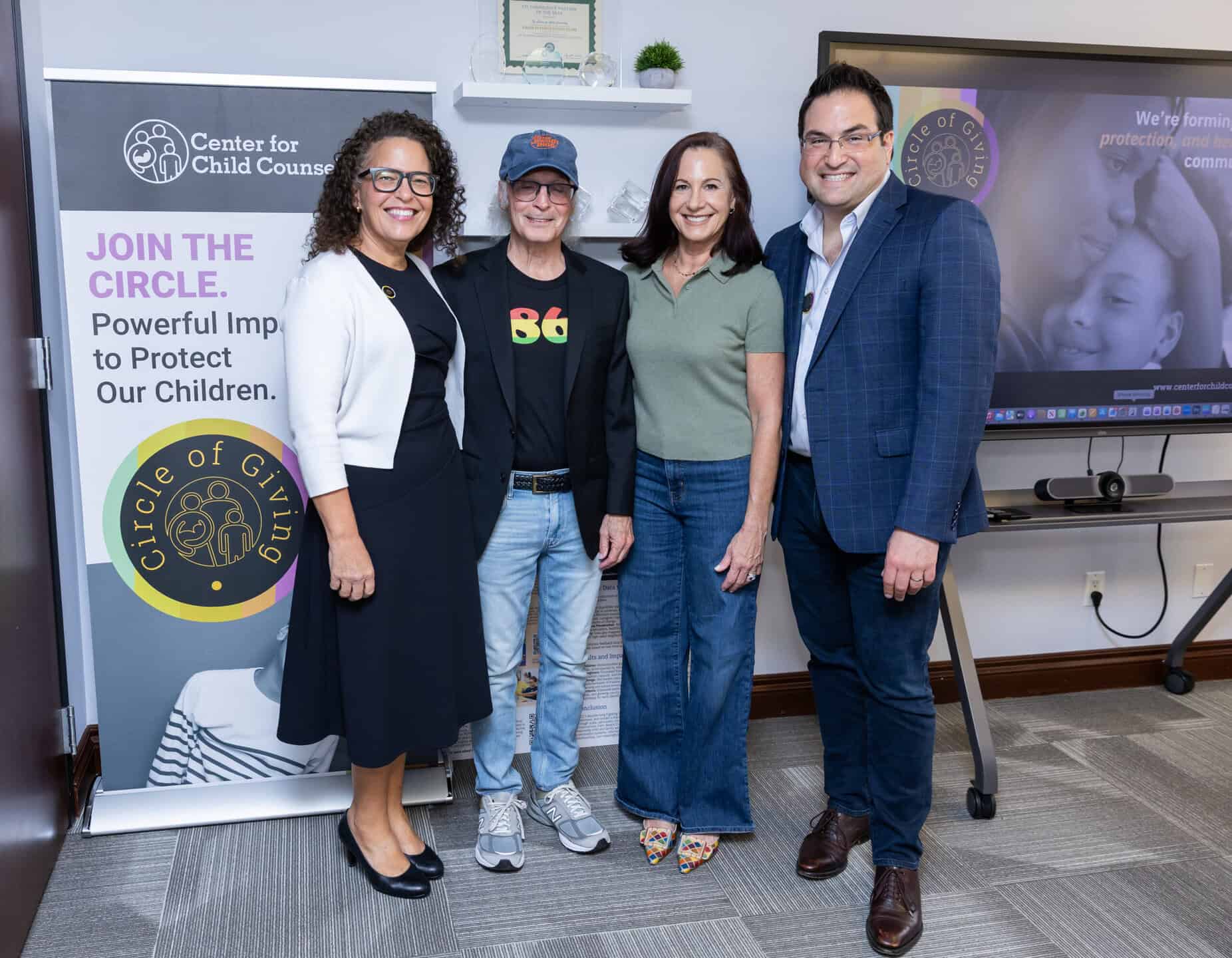
Center for Child Counseling (CFCC) recently welcomed its Circle of Giving members and community partners to an Open House at its new executive office for a night of celebration and connection. 

Together, with about 50 guests, CEO Renée Layman and her staff celebrated the agency’s new space and its impact made possible by the mission and partnerships that power it every day: a shared commitment to supporting children and families affected by trauma and adverse childhood experiences (ACEs). The main office is now located at 4400 PGA Boulevard, Suite 400C, Palm Beach Gardens.

The Circle of Giving is a relationship-first philanthropic community. The Center brings together dedicated individuals who are ready to make a lasting difference for children and families across Palm Beach County. Its members are part of a movement that builds real relationships with CFCC’s leadership, see impact firsthand, and grow advocates for children’s mental health.


CFCC launched its Circle of Giving, chaired by Melissa Haley, in November 2023 to drive action and change. The Circle unites philanthropists, advocates, community leaders, and partners dedicated to advancing children’s mental health through meaningful investment and strategic action. 

“Together, we turn awareness into tangible change and create lasting pathways to healing for children in our community. We aim to take action and drive advocacy toward a brighter future by forming a circle of love, protection, and healing around our community’s children,” stated Layman. 

According to Haley, “The Circle is more than just giving. It’s the relationships, the learning, and the opportunity to see the work up close.”

With these goals in mind for 2026, Haley and the CFCC leadership team have focused on creating a more intentional experience for its members. In addition to giving tours of the new office space, CFCC premiered two new videos which feature the importance of their community partnerships and how they use data to inform their programs and services. Guests learned about how the Center partners with schools and organizations in the community to better serve children and families. CFCC brings its services directly on-site to community partners, such as Rohi’s Readery and Opportunity Early Childhood Education & Family Center, to increase immediate access to care. The Center is also using a technology-driven approach to meet the adults and caregivers where they are. By using a robust Data Dashboard that collects real-time data, CFCC is able to intervene early in a child’s life to disrupt intergenerational cycles of abuse and trauma. 

We are bringing support directly to children and families who might not otherwise receive it. We are working to build a system that responds to children in a different way,” added Layman. 

The next Circle of Giving event will take place on September 9, 2026, at CFCC’s Family Visitation Center. Guests will walk through the newly renovated center and witness firsthand the compassionate systems that surround vulnerable children and families.

For more information on the Center for Child Counseling and to be a part of a community that is committed to children and families, and to learning and growing together, visit centerforchildcounseling.org/givingcircle.

About Center for Child Counseling
Center for Child Counseling has been building the foundation for playful, healthful, and hopeful living for children and families in Palm Beach County since 1999. Its services focus on preventing and healing the effects of adverse experiences and toxic stress on children, promoting resiliency and healthy family, school, and community relationships. www.centerforchildcounseling.org Twitter: @ChildCounselPBC Facebook: @CenterforChildCounseling Instagram: @childcounselpbc

Your Child’s Brain Is Listening: How Everyday Moments Shape Who They Become

Parent and child connecting — Center for Child Counseling
A Way of Being with HOPE — Article 1

Your Child's Brain Is Listening

How everyday moments shape who they become

Renée Layman
Renée Layman
President & CEO · HOPE Champion

You probably don't think of yourself as a brain architect. But every time you comfort your crying toddler, sit down for dinner with your school-age child, or simply listen — really listen — to your teenager talk about their day, you are physically shaping the structure of their brain.

This isn't a metaphor. It's neuroscience.

Your Child's Brain Is Under Construction

A child's brain develops more rapidly in the first five years of life than at any other time. By age three, a child's brain has formed roughly 1,000 trillion neural connections — twice as many as an adult brain. These connections are the wiring that will support everything your child does for the rest of their life: how they learn, how they handle stress, how they form relationships, and how they recover from setbacks.

Here's the part that changes everything for parents: the experiences your child has determine which connections get strengthened and which ones fade away.

Think of it like paths through a forest. The paths that get walked frequently become clear and easy to travel. The paths that are neglected grow over. Your child's daily experiences — the routines, the conversations, the moments of comfort and connection — are carving the pathways their brain will rely on for decades.

It's Not About Being Perfect

If this feels like pressure, take a breath. The research is actually reassuring.

Your child doesn't need perfect moments. They need consistent, good-enough moments — what scientists call "serve and return" interactions. Your baby coos, and you coo back. Your child points at something, and you look together. Your teenager rolls their eyes, and you stay steady instead of shutting down.

These small, everyday exchanges tell your child's developing brain something profound: I am safe. I am seen. Someone is here.

At Center for Child Counseling, we call this A Way of Being with Children — not a set of techniques to memorize, but a way of showing up in relationship with the children in your life. It's grounded in decades of research into attachment science, brain development, and the HOPE framework.

The Science of Positive Experiences

For years, the conversation about children's well-being focused on what goes wrong. Adverse Childhood Experiences — or ACEs — became a powerful framework for understanding how trauma, neglect, and toxic stress can change a child's brain and health trajectory.

But the science has evolved. And the question has shifted from "What happened to you?" to something equally important: "What went right?"

The HOPE framework — Healthy Outcomes from Positive Experiences — developed by the HOPE National Resource Center at Tufts Medical Center, identifies four building blocks that actively promote healthy development and buffer against the effects of adversity:

The Four Building Blocks of HOPE
R
Relationships
Stable, caring adults who show up consistently
E
Environments
Spaces that feel physically and emotionally safe
E
Engagement
Activities that build belonging and connection
E
Emotional Growth
Skills to navigate challenges and relate with empathy

The remarkable finding is this: positive experiences don't just make children feel good in the moment. They change the biology. They build the neural pathways for resilience, emotional regulation, and healthy relationships. They create a buffer that helps children weather adversity — even when life gets hard.

What This Means for You

You don't need to overhaul your family life. You don't need to sign up for a program or read a stack of books. The most powerful thing you can do is pay attention to the moments that are already happening — and lean into them.

At breakfast
Put your phone down and make eye contact. Ask a question. Listen to the answer.
During a meltdown
Resist the urge to fix or lecture. Get down to your child's level, stay calm, and simply be present. Your regulated nervous system helps regulate theirs — a process called co-regulation.
At bedtime
Create a moment of connection. A story. A conversation about the best part of the day. A simple "I'm glad you're mine."
When things go wrong
Repair the rupture. Say "I'm sorry I yelled. That wasn't about you." Children don't need parents who never make mistakes. They need parents who come back and reconnect.

These moments are not small. They are building your child's brain. Every single one.

When Everyday Moments Aren't Enough

Sometimes, despite a parent's best efforts, a child needs more support. Anxiety that won't ease. Behavior that keeps escalating. Grief that lingers. Trauma that disrupts daily life.

That's what we're here for.

Center for Child Counseling provides therapy, prevention education, and family support across Palm Beach County — at our centers, in schools, in homes, and through our Mobile HOPE Unit. We meet families where they are, because we know that the most important work happens in the context of real life.

If you're wondering whether your child might need support, our "What Does My Child Need?" guided tool can help you find the right program or resource for your family.

The Bottom Line

Every parent is already shaping their child's brain. The question isn't whether your daily interactions matter — they do, profoundly. The question is whether you recognize just how powerful you already are.

You are your child's first therapist, first teacher, and first safe place. The way you show up — imperfectly, consistently, lovingly — is the foundation for everything that follows.

That's A Way of Being with Children. And it starts with you.

Renée Layman
Renée Layman
President & CEO · Center for Child Counseling · HOPE Champion

Renée has led Center for Child Counseling since 2013, growing it from a small grassroots agency to one serving over 7,500 children annually across Palm Beach County. With nearly 30 years in children's mental health, she is a certified HOPE Champion through the HOPE National Resource Center at Tufts Medical Center, President of the Florida Association for Infant Mental Health, and author of the updated A Way of Being with Children PreK Manual.

Every Child Deserves to Feel Safe & Supported

Whether you're looking for resources, seeking professional support, or simply trying to understand what your child is going through — we're here to help.

Jibby Ciric Promoted to Chief Program Officer

NEWS RELEASE
June 9, 2026
For immediate release
Media contact: Cara Scarola Hansen
Center for Child Counseling Public Relations Counsel
cara@yourmissionmarketing.com

Jibby Ciric Promoted to Chief Program Officer of Center for Child Counseling

Center for Child Counseling (CFCC) announces the promotion of Ljubica “Jibby” Ciric, PsyD. to Chief Program Officer to help shape the overall direction of the agency. This executive role holds accountability for the vision, quality, and growth of all CFCC programs–spanning prevention, early intervention, and treatment services for children, families, and communities across Palm Beach County. 

“I am delighted to share that Jibby will assume the role of Chief Program Officer. Having already held the leadership role as senior director, strategic impact for Center for Child Counseling, Jibby has earned the trust of our program directors and staff. She also brings deep clinical expertise and prior executive leadership as a former vice president at Community Partners. Her steady judgment and her commitment to our public health approach to children’s well-being make her an exceptional fit for this role. I have full confidence in her leadership of our program portfolio,” stated Renée Layman, chief executive officer of Center for Child Counseling. 

In her new role, Ciric directly supervises CFCC’s program directors, leads strategic relationships with major funders and system partners, works in tandem with the Chief Quality Officer on program quality and continuous improvement, and serves as a member of the senior leadership team. This position plays a crucial role in supporting the Center’s mission to promote playful, healthful, and hopeful living for children, families, and communities. 

“It has been a great honor and joy to be a part of CFCC’s mission and vision for more than two years. As I assume a new position alongside professionals I admire and aspire to be, I am grateful and fortunate to continue to make a meaningful impact on children and families,” commented Ciric. 

###

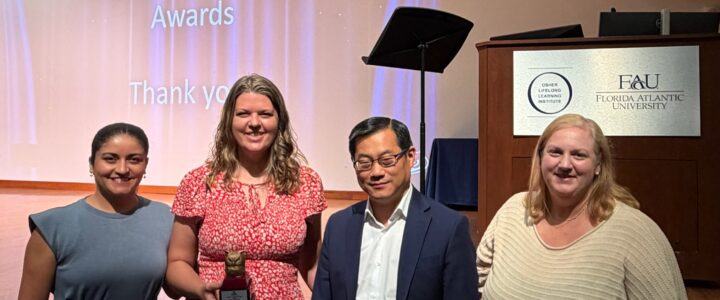
FAU Honors CFCC as Employer of the Year

NEWS RELEASE
May 21, 2026
For immediate release
Media contact: Cara Scarola Hansen
Center for Child Counseling Public Relations Counsel
cara@yourmissionmarketing.com

Florida Atlantic University (FAU) recently honored Center for Child Counseling (CFCC) as Employer of the Year at its 2026 Northern Campuses Awards Ceremony.

“This award honors the partnership we have established with the Center for Child Counseling and recognizes them for actively recruiting from FAU and for providing excellent learning opportunities for our students,” said Kelly Nielsen, assistant director of the Florida Atlantic Career Center. 

The Center’s internship program is an immersive clinical experience where bachelor’s and master’s level students learn evidence-based and best practices and put that knowledge into practice. From CFCC’s play therapy rooms to schools and childcare centers across Palm Beach County, interns build the skills, confidence, and relationships that launch a career dedicated to children and families. 

According to CFCC CEO Renée Layman,”This isn’t a program where you watch from the sidelines. We have been so fortunate to choose talented, passionate students from FAU who immediately become part of our team that is changing the trajectory of children’s lives across Palm Beach County.”

The undergraduate internship is designed for students who want to explore the world of children’s mental health, nonprofit leadership, and community impact. Master’s level students are immersed in hands-on therapeutic work with children, teens, and families. They earn clinical hours, receive expert supervision from registered play therapists and infant mental health specialists, and learn evidence-based practices across more than 30 community sites. Whether the student’s focus is clinical, creative, or organizational, they gain real-world experiences that shape their career direction.

For more information on the Center for Child Counseling, its internship program, or careers dedicated to making the difference in the lives of children and families, visit centerforchildcounseling.org/internship

About Center for Child Counseling
Center for Child Counseling has been building the foundation for playful, healthful, and hopeful living for children and families in Palm Beach County since 1999. Its services focus on preventing and healing the effects of adverse experiences and toxic stress on children, promoting resiliency and healthy family, school, and community relationships. www.centerforchildcounseling.org Twitter: @ChildCounselPBC Facebook: @CenterforChildCounseling Instagram: @childcounselpbc

Click here to view the news release.

###

CFCC Receives $100,000 Grant Through Morgan Stanley’s Field Philanthropy Program

NEWS RELEASE
May 8, 2026
For immediate release
Media contact: Cara Scarola Hansen
Center for Child Counseling Public Relations Counsel
cara@yourmissionmarketing.com

Center for Child Counseling Receives $100,000 Grant Through Morgan Stanley’s Field Philanthropy Program

Center for Child Counseling (CFCC) recently received a $100,000 grant from the Eaton Vance U.S. Charitable Gift Trust through the Morgan Stanley Field Philanthropy Program, an innovative partnership between Morgan Stanley’s Wealth Management and Investment Management businesses that helps support high‑impact nonprofits in local communities.

The grant will support counseling, education, and community resources, advancing Center for Child Counseling’s mission to build the foundation for playful, healthful, and hopeful living and strengthening outcomes across children, families, and communities in Palm Beach County.

“This generous support will help us provide the training and services that help children heal from adversity, build resilience, and thrive–while strengthening the adults and systems that surround and support them every day,” said Renée Layman, CEO of CFCC. “We’re deeply grateful to Morgan Stanley for prioritizing community‑driven philanthropy and for investing in work that’s truly making a difference locally.”

The Morgan Stanley Field Philanthropy Program enables Morgan Stanley Wealth Management employees to nominate nonprofit organizations that matter to their teams and their communities. Through this program, the West Palm Beach market identified organizations creating meaningful impact across key focus areas including education, healthcare, children, environment, arts, poverty and emergency relief. Selected nonprofits receive grants through Eaton Vance U.S. Charitable Gift Trust following a rigorous review and due‑diligence process.

“One of the most meaningful parts of working at Morgan Stanley is supporting organizations that matter to our team and our community,” said Vincent Colucci, market executive. “Through the Field Philanthropy Program, we’re proud to support Center for Child Counseling and help expand their impact.”

The nonprofits selected through the Field Philanthropy Program represent a wide range of missions and causes, reflecting Morgan Stanley’s long‑standing commitment to supporting resilient, inclusive, and thriving communities nationwide.

For more information about Center for Child Counseling, visit centerforchildcounseling.org

About Center for Child Counseling
Center for Child Counseling has been building the foundation for playful, healthful, and hopeful living for children and families in Palm Beach County since 1999. Its services focus on preventing and healing the effects of adverse experiences and toxic stress on children, promoting resiliency and healthy family, school, and community relationships. www.centerforchildcounseling.org Twitter: @ChildCounselPBC Facebook: @CenterforChildCounseling Instagram: @childcounselpbc

About Morgan Stanley
Morgan Stanley is a leading global financial services firm providing a wide range of investment banking, securities, wealth management, and investment management services. The firm is committed to making a positive impact in the communities where its employees live and work through strategic philanthropy, volunteerism, and community engagement.

Click here to view the news release.

###

Parenting Expert Practical, ‘No-Drama’ Ways to Rethink Discipline and Build Hope

NEWS RELEASE
April 17, 2026
For immediate release
Media contact: Cara Scarola Hansen
Center for Child Counseling Public Relations Counsel
cara@yourmissionmarketing.com

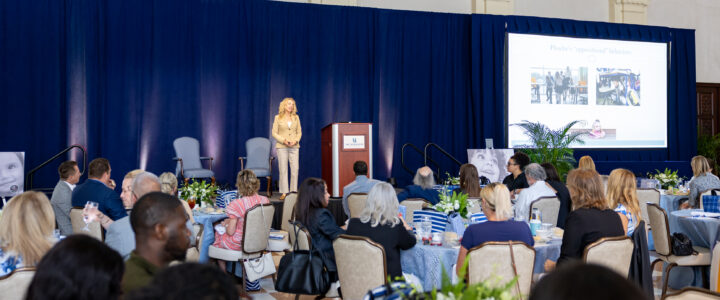
Dr. Tina Payne Bryson shared her expertise on supporting children’s emotional growth at Center for Child Counseling’s 2026 Lead the Fight kickoff luncheon.

World-renowned parenting expert and clinician Dr. Tina Payne Bryson emphasized the “no-drama” way of disciplining children at Center for Child Counseling 2026 kick-off Lead the Fight luncheon on April 9, 2026, at The Breakers. 140 statewide leaders and community members left with practical, tangible knowledge of how to rethink discipline and support children’s emotional and relational development.

Dr. Bryson, a New York Times bestselling author, shared her expertise on responding to others with curiosity and looking at behavior as communication. 

“When we invoke curiosity in our own brains, or in someone else’s brain–whether that’s a teacher, or a parent, or a kid–it activates the pre-frontal cortex and helps us be better problem-solvers, more empathetic, and more integrated in our brains, so we are less likely to be reactive,” explained Dr. Bryson.  

She helped the audience understand that discipline does not have to be punitive, but it should teach and build skills. 

“When we say ‘yes’ to a child, we can still say ‘no’ to a behavior…the reason we address childhood behaviors is because we are trying to build skills so that they become self-disciplined and they are good people who do the right thing, even when no one is looking.”

Dr. Bryson equated behavior to communication: “If we think about how behavior is communication, about what skills they don’t yet have, then it’s easy to figure out what to do in the name of discipline…we have to think about the struggles themselves as the opportunities.” 

She gave the example of a child who blurts out in class every time before having to choose a group. While the teacher thought this child was being disrespectful and oppositional, the behavior stemmed from not having the appropriate skills to join peers. When taught how to ask “Can I join you,” the behavior stopped. 

Since most of what is done in the name of discipline does not make a lot of sense, “we want to rethink what we are doing and why we’re doing it.”

Questions to consider when rethinking a discipline strategy, include: Does it build the relationship? Is the response counter-productive? Is it the right time? Is it building regulation and/or skills? Is the way I’m handling this moving the child closer to or further away from doing better next time? 

She advised, “Pause before you respond to the behavior. Then ask, ‘Is the way I’m about to respond going to make it more likely they can do better the next time or not?’”

Dr. Bryson shared that the biggest predictor for how well kids turn out is that they have “secure attachment” to at least one person who gives them repeated experiences of feeling safe, seen, soothed, and secure.

She concluded, “When children are at their worst, that’s when they most need connection…it’s about relationship and safety first. Their relationship with you. What you do matters. And when you take that and combine it in rethinking challenging behaviors as opportunities to build skills and teach, we’re going to be building brains, building relationships, and generationally changing the world in ways it needs to be changed.”

Dr. Bryson’s transformative work aligns with Center for Child Counseling’s HOPE framework–healthy outcomes from positive experiences–which marks the foundation of everything CFCC does. The Center is not just responding to crisis, it is walking alongside children, families, schools, organizations, and congregations building hope throughout Palm Beach County: it serves as a nationally-recognized model for fighting ACEs (adverse childhood experiences). 

At the luncheon, the Center formally announced the availability of its updated “A Way of Being with Children” manual–an early childhood curriculum grounded in trauma-informed and HOPE-informed care. The manuel is a practical, research-based resource for every adult who works or cares for children.

A Way of Being with Children centers relationship and regulation, what matters most, and reminds us that how we are with children matters as much as what we do. Rooted in science, and rich with practical tools, it offers a shared and essential framework for parents and professionals supporting children ages 0–5,” endorsed Dr. Bryson. 

CFCC’s Chief Executive Officer Renée Layman thanked Dr. Bryson for bringing her brilliance to Palm Beach County, “What you have given us is…a lens we now carry into every interaction we have with a child from this moment forward…We do not have to wait for a child to fall apart to start helping them. Prevention is cheaper than correction. HOPE is more powerful than despair…Thank you for being here. Thank you for leading the fight.” 

Attendees left better equipped to foster connection, understanding, well-being, and HOPE in children, families, and communities.

The event was chaired by Kathy Leone and emceed by WPTV 5’s Ashley Glass. Donors and corporate sponsors that made this important conversation possible include: The Breakers Palm Beach, Searcy Law, Children’s Services Council of Palm Beach County, Keating Moore Construction, Sage View, WPTV 5, Stephens & Stevens Marital & Family Law, Valley Bank, Kathy Leone, Jodie & Jeff Petrone, and a visionary family foundation. 

CFCC’s Fighting ACEs initiative to build trauma-informed communities is made possible with the generous support of Quantum Foundation, Community Foundation for Palm Beach and Martin Counties, and private donors.

For more information on CFCC and how it is bringing science, compassion, and community together to prevent adversity, strengthen resilience, and build a safer, healthier future for children and families, visit: centerforchildcounseling.org/leadthefight.  

###

Sending your child to camp? Ask these questions first.

Op-Ed
April 15, 2026
For immediate release
Media contact: Cara Scarola Hansen
Center for Child Counseling Public Relations Counsel
cara@yourmissionmarketing.com

Sending your child to camp? Ask these questions first. 

By: Cherie Benjoseph, LCSW, Center for Child Counseling director of national outreach and education and creator of the CampSafe® curriculum.

If you could go back to any age, what would it be? For me, it’s easy—I think of my incredible summers at sleepaway camp, starting at age eight. Those experiences were formative, joyful, and unforgettable. I’m a strong supporter of day and residential camp—provided that camp is properly vetted for safety. That’s where you come in.

Are you considering the big step of sending your child to camp for a week, a month, or even an entire summer? Maybe you’re looking at a camp you attended as a child, one recommended by a friend, or one you discovered online. With so many choices, how do you get the answers you really need?

Before making a decision, take a step back. Look beyond glossy websites and highlight reels. Ask yourself: Does this camp truly prioritize safety? And not just physical safety like swimming or sports—but emotional and interpersonal safety as well.

At the Center for Child Counseling, our mission is to empower children and families with lifelong skills—so kids can spread their wings with confidence, and parents can feel secure knowing their children are prepared to navigate challenges. Camp—whether day or overnight—can be an incredible part of that growth.

When researching camps, it’s natural to focus on your child’s interests: sports, theater, horseback riding, STEM, culinary arts, or even location and religious affiliation. These factors matter—but they shouldn’t overshadow the most important question: Is this a safe environment for my child?

Think of choosing a camp the same way you would vet a potential employee. Don’t assume camps are doing thorough screening—ask the tough questions.

What Every Parent Should Ask Before Choosing a Camp

  1. Meet the camp director.
    This is the person responsible for your child’s well-being. Meet in person or via video. Ask:
  • How is staff recruited?
  • What does the screening process include?
  • Are references checked and employment histories verified?
  • What is staff retention like from year to year?
  1. Confirm comprehensive background checks.
    Does the camp conduct national fingerprint-based criminal background checks? Basic checks alone may not reflect thorough vetting.
  1. Verify screening through the National Sex Offender Registry.
    This should apply to everyone on-site—counselors, administrative staff, dining personnel, maintenance, and more.
  1. Review the Child Protection Policy.
    Ask for a copy. This policy should clearly outline:
  • Codes of conduct
  • Policies on sexual misconduct
  • Procedures for reporting and responding to concerns
  1. Ask about staff training.
    Staff should be trained in:
  • Sexual abuse prevention, intervention, and reporting
  • Bullying prevention and response
  • Recognizing and addressing physical and emotional abuse
  1. Understand supervision practices.
    How are staff monitored and supported while they are responsible for campers?
  1. Know the reporting procedures.
    If a camper or staff member has a concern, how is it reported? What follow-up steps are taken?
  1. Confirm state licensing.
    Is the camp licensed? Request documentation.
  1. Look for accreditation.
    Is the camp accredited by the American Camp Association? Ask to see proof of certification.

Having these conversations will help you determine whether a camp offers more than just fun activities and good food—it will show you whether it is grounded in professionalism, accountability, and a genuine commitment to child safety.

The Center for Child Counseling specializes in training adults who work with children in camp settings. If you’re considering a specific camp, ask whether it is CampSafe® trained. If not, you can share more information with them at: bekidsafe.org/camps.

When it comes to your child, peace of mind should not be optional—it should be part of the package.

About Center for Child Counseling
Center for Child Counseling has been building the foundation for playful, healthful, and hopeful living for children and families in Palm Beach County since 1999. Its services focus on preventing and healing the effects of adverse experiences and toxic stress on children, promoting resiliency and healthy family, school, and community relationships. www.centerforchildcounseling.org Twitter: @ChildCounselPBC Facebook: @CenterforChildCounseling Instagram: @childcounselpbc

###

Circle of Giving Kickoff Event Advances Children’s Mental Health Through Meaningful Investment

NEWS RELEASE
April 7, 2026
For immediate release
Media contact: Cara Scarola Hansen
Center for Child Counseling Public Relations Counsel
cara@yourmissionmarketing.com

Community members gather to learn about Center for Child Counseling and drive change for kids. 

Founding members of Center for Child Counseling (CFCC)’s Circle of Giving, Jeff and Jodie Petrone, hosted an inspiring evening on Thursday, March 26, celebrating the community’s shared commitment to supporting children and families affected by trauma and adverse childhood experiences (ACEs).


CFCC launched its Circle of Giving, chaired by Melissa Haley, in November 2023 to drive action and change. The Circle unites philanthropists, advocates, and community leaders dedicated to advancing children’s mental health through meaningful investment and strategic action. 

“Together, we turn awareness into tangible change and create lasting pathways to healing for children in our community. We aim to take action and drive advocacy toward a brighter future by forming a circle of love, protection, and healing around our community’s children,” stated Renée Layman, chief executive officer of CFCC. 

Mr. Petrone, treasurer and secretary of the board of directors, shared that there is an increased need across schools, healthcare, and families, and organizations like CFCC are essential to helping address those needs in a thoughtful, evidence-based, and compassionate way.

“Being a founding member of the Circle of Giving has been meaningful because it brings together people who are not only willing to support this work, but who want to understand it more deeply and be part of it. And that’s really what tonight is about—connection, understanding, and shared commitment,” said Mr. Petrone.

For 2026, CFCC reimagined the Circle of Giving experience–offering new opportunities for connection, learning, leadership, and impact. 

According to Haley, “We’ve realized that what makes the Circle special is not just the giving, it’s the relationships, the learning, and the opportunity to see the work up close. As we move forward, we’re focusing on creating a more intentional experience for members.”

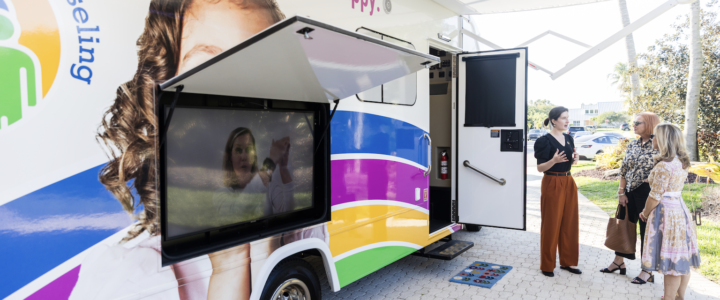
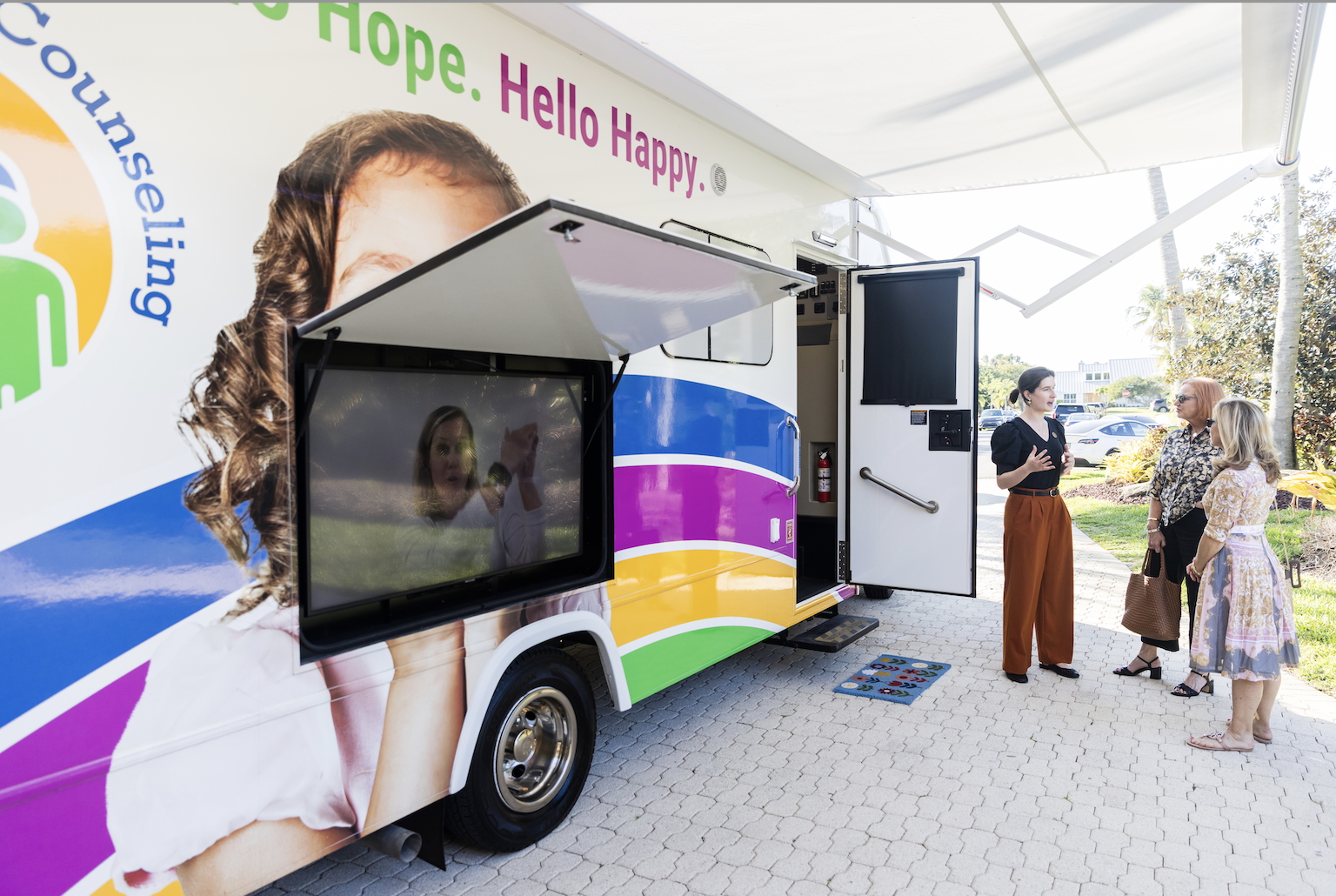
As a way to demonstrate this ‘intentional experience,’ guests had the opportunity to tour the Center’s mobile unit–a 25-foot bus that drives the Center’s mental health care services directly to the kids who need it most. It is a moving, healing space that delivers trauma-informed care, prevention tools, and hope to hurting children. The mobile unit eliminates barriers to accessing care and transforms how services are delivered throughout the county: ensuring that no child’s future is determined by their zip code. 

Layman emphasized, “It’s what it looks like when we bring support directly to children and families who might not otherwise receive it. And it’s just one example of how CFCC is working to build a system that responds to children in a different way.” 

The Center’s work is grounded in the understanding that children need safe, supportive relationships and environments to thrive. When those are disrupted, it impacts everything—health, behavior, learning, and long-term outcomes. 

“But we also know something incredibly hopeful—that positive experiences, connection, and support can change that trajectory.”

The kickoff event marked the start of an exciting new chapter for CFCC–one that is being shaped by the Center’s Circle of Giving.

”Tonight is really about recognizing that this work doesn’t happen alone–it happens through partnership. So, thank you for being here, for your interest, and for your willingness to be a part of this Circle,” Layman expressed.

For more information on the Center for Child Counseling and to be a part of a community that is committed to children and families, and to learning and growing together, visit centerforchildcounseling.org/givingcircle

###

A Child’s Story Doesn’t Have to End the Way it Began

NEWS RELEASE
April 2, 2026
For immediate release
Media contact: Cara Scarola Hansen
Center for Child Counseling Public Relations Counsel
cara@yourmissionmarketing.com

A special screening of ‘Resilience’ and community conversation with nonprofit, higher education, and medical leaders gives hope for all children. 

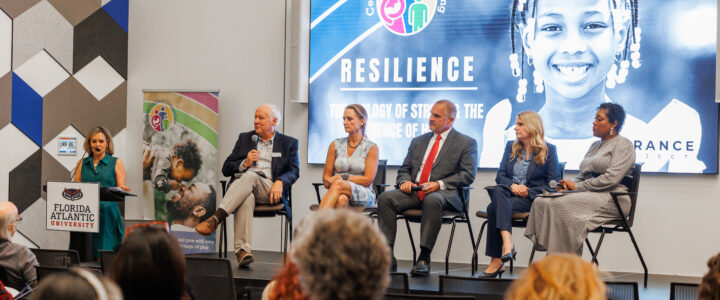
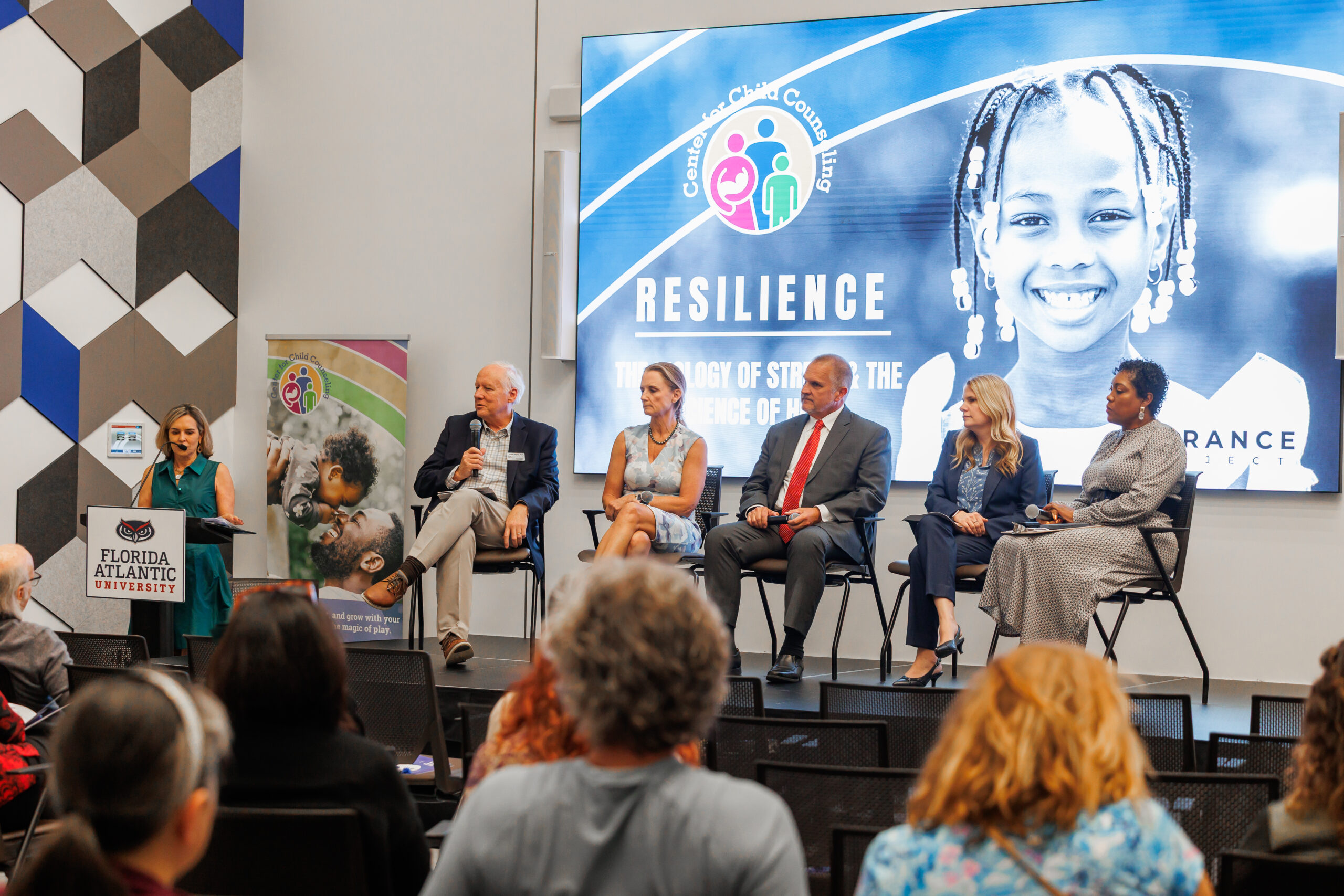
“Children’s lives can be different…the story doesn’t have to end the way it began.” This was the hopeful and resounding message at the recent event Center for Child Counseling (CFCC) hosted at the FAU Stiles-Nicholson Brain Institute. Presented in partnership with the LaFrance Project, community members came together to reflect on their shared commitment to preventing and healing childhood adversity. 

The evening featured a screening of the acclaimed documentary Resilience: The Biology of Stress & the Science of Hope and a thought-provoking panel discussion with community experts in the fields of neuroscience, medicine, education, the judicial system, and mental health.

The documentary uncovers one of the most important public health discoveries of our time: the science of Adverse Childhood Experiences (ACEs). The film explores how toxic stress can alter brain architecture, increase the risk of chronic disease, and shape the trajectory of children’s lives. Just as importantly, it shines a light on proven solutions that communities are using to break cycles of adversity and build resilience.

Resilience reflects the science that has guided Center for Child Counseling’s Fighting ACEs Initiative for the past decade—revealing how early adversity affects health and development, and how informed, connected communities can create lasting change. The film reinforces a powerful message at the heart of our work: resilience grows when awareness, prevention, and supportive relationships come together.

Over the past decade, CFCC, along with its extraordinary partners, has embedded trauma-informed care into pediatric practices, school systems, judicial systems, and early childhood programs.

“We’ve helped build trauma-informed childcare and classrooms. We’ve piloted and scaled the HOPE (healthy outcomes from positive experiences) framework—because we learned that it’s not enough to count ACEs. We must build positive childhood experiences. We must give children something to run toward, not just something to run from,” stated Renée Layman, chief executive officer of CFCC. 

The Center uses a data-to-action approach—one of the only integrated clinical dashboards of its kind in the nation—to identify trends, respond in real time, and measure what is actually working. 

“Because behind every data point is a child. A face. A family. A story. The science has confirmed what we hoped: resilience is real. It’s biological. And it can be built,” added Layman.

Following the viewing of the film, Lisa LaFrance, investment professional turned philanthropist, moderated a discussion with the panelists, including: Dr. Randy Blakely, Ph.D., founding executive director of the FAU Stiles-Nicholson Brain Institute and director of the Neuroscience Graduate Program at FAU; Dr. Eugenia Millender, co-founder and co-director of the Center of Population Sciences for Health Empowerment, assistant dean for research, and Marie Cowart endowed professor at Florida State University College of Nursing; Keith Oswald, chief of student health and wellness for the Palm Beach County School District; Mary Quinlan, chief deputy court administrator for the Fifteenth Judicial Circuit in Palm Beach County, Florida; Dr. Shannon Fox- Levine, South Florida medical director at Bluebird Kids Health, medical director at Center for Child Counseling, and president of the Palm Beach County Pediatric Society.

“This panel represents something remarkable — five systems that rarely sit at the same table. The brain. The body. The classroom. The courtroom. The community. And yet, ACEs science has reached into all of them and asked the same question: how do we stop waiting for children to fall apart, and start building the conditions for them to thrive?”commented LaFrance. 

Attendees gained insight into how early adversity impacts health and development; learned how local leaders are creating real change in our community; and connected with others committed to ensuring every child grows up safe, supported, and resilient. They left with the reinforced knowledge that a child’s story doesn’t have to end where it began, and every community member can play a role in writing that story of hope. 

For more information on the Center for Child Counseling, how it is fighting ACEs and providing HOPE, or upcoming community events, visit centerforchildcounseling.org.

About Center for Child Counseling
Center for Child Counseling has been building the foundation for playful, healthful, and hopeful living for children and families in Palm Beach County since 1999. Its services focus on preventing and healing the effects of adverse experiences and toxic stress on children, promoting resiliency and healthy family, school, and community relationships. www.centerforchildcounseling.org Twitter: @ChildCounselPBC Facebook: @CenterforChildCounseling Instagram: @childcounselpbc

###

Social media & sharing icons powered by UltimatelySocial