The HOPE Framework: What Positive Experiences Actually Do to Your Child's Brain
The science is remarkable
For decades, the conversation about children's well-being has focused on what goes wrong. Adverse Childhood Experiences. Toxic stress. Trauma. These are real, and they matter enormously. But somewhere along the way, we forgot to ask an equally important question: what goes right?
The HOPE framework — Healthy Outcomes from Positive Experiences — asks that question. And the answer is changing how we think about childhood, parenting, and what it truly takes for a child to thrive.
A Fundamental Shift
The ACEs framework taught us that adversity in childhood has real, lasting effects on health and development. That was groundbreaking — and it led to an entire field of research, policy change, and clinical practice. Center for Child Counseling has been at the forefront of that work through our Fighting ACEs initiative and ACEs Toolkit.
But ACEs alone tell only half the story. Knowing what hurts children doesn't automatically tell us what heals them.
That's the shift HOPE provides:
HOPE doesn't replace ACEs science — it completes it. It gives us a roadmap for building the positive experiences that buffer adversity, change brain architecture, and give every child a fighting chance.
The Four Building Blocks of HOPE
Developed by the HOPE National Resource Center at Tufts Medical Center, the HOPE framework identifies four categories of positive experiences that research shows are essential for healthy development. These aren't abstract ideals — they're specific, actionable, and available to every family, school, and community.
What the Research Shows
The science behind HOPE isn't wishful thinking. A landmark 2019 study by Dr. Christina Bethell at Johns Hopkins found that Positive Childhood Experiences — including feeling safe, supported, and connected — independently promote adult mental health, regardless of how many ACEs a person experienced. In other words, positive experiences don't just feel good — they biologically change outcomes.
This is what makes HOPE so powerful: it's not about erasing adversity. It's about building something alongside it that changes the equation. A child with four ACEs and four strong building blocks of HOPE has a fundamentally different trajectory than a child with four ACEs and none.
HOPE doesn't replace the work of addressing adversity. It completes it — by giving us a science-backed roadmap for what to build, not just what to prevent.
HOPE at Center for Child Counseling
At Center for Child Counseling, HOPE isn't just a framework we teach — it's how we operate. I became a certified HOPE Champion through the HOPE National Resource Center at Tufts Medical Center because I believe this framework has the power to transform how we serve children and families. Our entire organizational approach — from our A Way of Being with Children philosophy to our community education, clinical programs, and training — is built on the HOPE framework.
Every interaction our team has with a child, a family, or a professional is designed to promote at least one of the four building blocks. When a therapist meets with a child at school, that's Relationships. When we train childcare providers, that's Environments. When a child participates in our ArtClub program, that's Engagement. When SNAP® teaches self-regulation skills, that's Emotional Growth.
HOPE is the thread that connects everything we do.
What HOPE Means for You
You don't need to be a clinician, a teacher, or a policymaker to apply HOPE. You're already doing it — every time you hug your child, show up to a school event, eat dinner together, or simply ask "How are you feeling?"
The HOPE framework gives you the language and the science to understand why those moments matter so much — and to be intentional about creating more of them. Not perfectly. Not exhaustively. Just consistently enough that your child's brain gets the message: I am safe. I belong. Someone cares. I can handle this.
The Bottom Line
HOPE isn't about ignoring adversity. It's about refusing to stop there. It's the recognition that what we build for children matters just as much as what we protect them from — and that every parent, every teacher, every community has the power to change a child's trajectory through the simple, profound act of showing up.
Relationships. Environments. Engagement. Emotional Growth.
Four building blocks. One framework. A lifetime of impact.
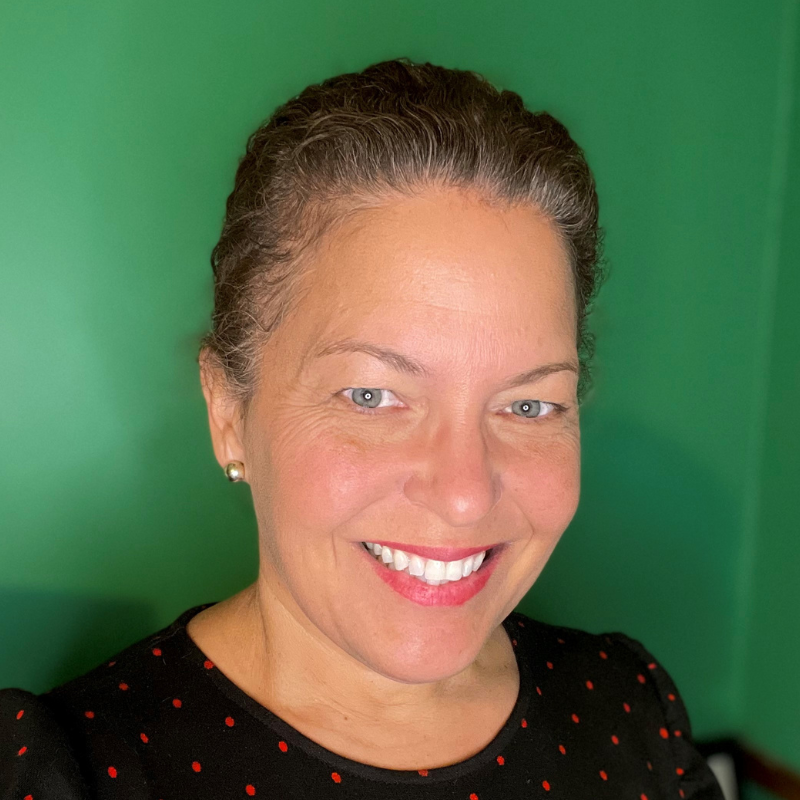
Renée has led Center for Child Counseling since 2013, growing it from a small grassroots agency to one serving over 7,500 children annually across Palm Beach County. With nearly 30 years in children's mental health, she is a certified HOPE Champion through the HOPE National Resource Center at Tufts Medical Center, President of the Florida Association for Infant Mental Health, and author of the updated A Way of Being with Children PreK Manual.
Building HOPE for Every Child
Center for Child Counseling brings the HOPE framework to life through therapy, prevention education, and family support across Palm Beach County.