
Stop Now and Plan
SNAP®
Struggling with your child's behavior? You're not alone, and there's a proven program that can help.
SNAP® is an evidence-based, 13-week program that teaches children and the adults in their lives how to manage big emotions, solve problems, and make better choices in the moment. Center for Child Counseling is a licensed SNAP® affiliate, and every part of the program is offered at no cost to families in Palm Beach County.
Children and caregivers meet at the same time, learning the same skills so the whole family speaks one language. Siblings are welcome too.
Created in 1985 and now used around the world, SNAP® is backed by decades of research showing lasting change at home and at school.
Funded by the Florida Network of Youth and Family Services and the Palm Beach County Youth Services Department. Families never pay.
This page has something for the grown-ups and something for the kids. Pick your door.
Three Steps to Better Choices
SNAP® stands for Stop Now And Plan. It is one sentence a child can say to themselves in the middle of a hard moment, at home, at school, or with friends. The steps are simple on purpose, and with practice they stop being steps at all.
as a stoplight
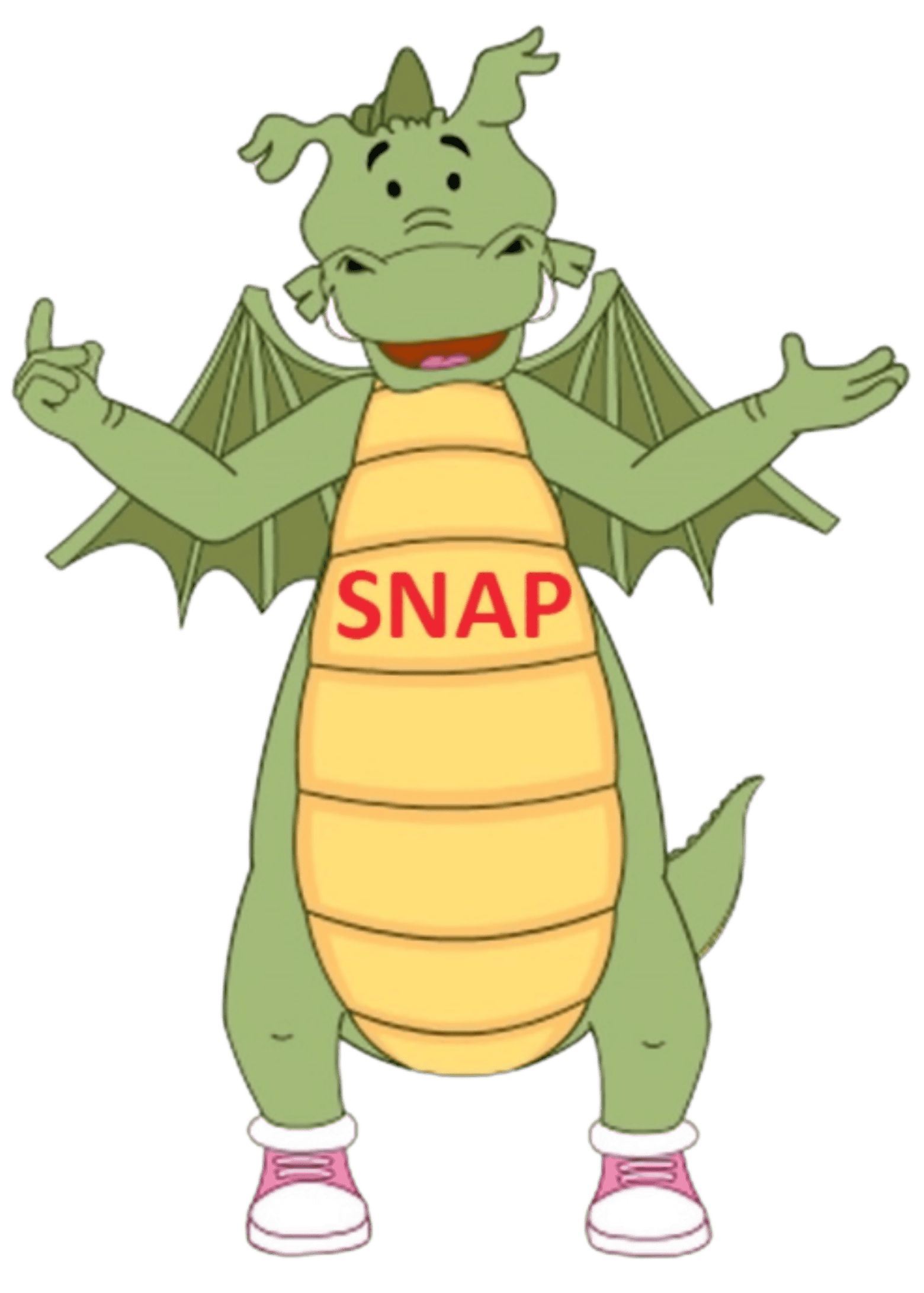
Notice the signals first. A racing heart, hot cheeks, clenched fists. Those are the body's early warning that a feeling is getting big, and they show up before the words do. Then pause, before doing anything.
Sounds likeTake a breath. Count to ten. Step back. Put your hands in your pockets.
This is the moment where a problem gets bigger or smaller. Catch the thought that is pouring fuel on it, trade it for one that actually helps, and think one step ahead about what happens next.
Sounds likeThis is hard, but I can do it. If I yell, this gets worse for me.
Pick the plan that keeps the problem small. A good plan does three things at once: it makes the problem smaller, it leaves you feeling okay about yourself, and it does not hurt anybody.
Sounds likeAsk instead of grab. Walk away and come back. Tell someone who can help.
Children do not learn this by being told. In SNAP® they rehearse it, week after week, in situations that look like their real ones, with their parents learning the same three steps at the same time. That is what makes it hold up on a hard Tuesday.
Straight Answers
The questions families actually ask us on the phone, answered plainly. If yours is not here, call and ask. Nobody will pressure you into anything.
SNAP® is funded by the Florida Network of Youth and Family Services and the Palm Beach County Youth Services Department. There is no fee, no co-pay, and no bill at the end. You do not need insurance or Medicaid, and a diagnosis is not required. Eligibility is confirmed through a short screening with our intake team.
Groups form throughout the year rather than on one fixed calendar, so the best thing you can do is tell us you are interested now and we will reach out about the next group that fits your child's age and your part of the county.
Fill out the interest form or call our intake team. Either way a real person follows up with you and walks through a short screening, which confirms whether SNAP® is the right fit for your child and, if it is not, points you to a program that is. Filling out the form does not commit you to anything.
Behavior is usually how a child tells us something feels too big to handle yet. SNAP® teaches the skill that was missing. Children are not labeled, and for a lot of kids it turns out to be the first group where they are not the one causing problems.
It is also voluntary. You can ask questions, come look, and decide.
You can refer your own child. Families reach us directly all the time and that is a completely normal way in.
Referrals also come from schools, pediatricians, childcare centers, after-school and mentoring programs, shelters, child welfare, probation officers, and community organizations. All of them land in the same place: our centralized intake team, which is the single point of entry for SNAP®.
For SNAP® in Schools and Communities, no referral is needed at all. It is delivered to a whole class or group, so no child is singled out.
Many children in SNAP® have ADHD or another mental health diagnosis, and many have no diagnosis at all. A diagnosis on its own neither qualifies nor rules out a child.
SNAP® is built for a specific need: children ages 6 to 11 showing behavioral challenges or early signs of struggling with self-control, who can take part in a group that runs on practice, role-play, and repetition. The screening is how we find out together whether that matches what your child needs right now.
If SNAP® turns out not to be the right fit, that is not a dead end and you do not start over. Center for Child Counseling runs many other programs for children and families, and the same intake team walks you to the one that fits. One phone call either way.
Yes, and it is the part parents tell us they did not expect to value. A caregiver group runs at the same time as your child's group, learning the same strategies, so the family ends up speaking one language instead of a child bringing home skills nobody else knows.
It is not therapy and you will not be asked to talk about your own childhood. It is practical: what to do in the moment, how to stay steady when your child is not, and how to hold a limit without a fight. You will also be in a room with other parents who understand the week you have had.
Between sessions a facilitator calls you once a week to work through whatever came up at home.
Bring them. A sibling group runs at the same time, with its own facilitator, its own games and activities, and a simple version of the same SNAP® ideas. No extra cost and no separate sign-up.
This is one of the most common reasons a family never makes it to a first session, so we built around it.
Groups run in the evening or right after school, which is exactly when everyone is hungry and nobody has cooked. You do not need to feed everyone before you come, and you do not need to bring anything.
SNAP® Under 12 groups meet once a week for thirteen weeks, in the evening or after school, so caregivers can actually be there.
Locations are spread across Palm Beach County on purpose, so you are not driving the length of the county on a weeknight. Groups are held at:
- Center for Child Counseling offices
- School-based locations
- Trusted community partner sites
When we contact you, we will match you to a group near you. SNAP® Youth Justice groups for youth on probation are held at probation offices around the county for the same reason.
You are not dropped and you have not ruined it. Make-up sessions are scheduled as needed, and every family gets the full thirteen sessions of the curriculum, not just whatever they happened to catch.
If something is consistently getting in the way, tell your facilitator. Sorting out schedule conflicts, transportation, and the rest of life is part of their job, not an imposition on it.
Intake and family support are available in English, Spanish, and Haitian Creole. SNAP® materials are translated into Spanish, and we have staff who deliver services in Spanish and Haitian Creole, with additional languages spoken across our team.
Tell us the language you would rather use when you first call, and we will match you with staff accordingly.
Yes. SNAP® Youth Justice serves youth ages 12 to 19 who are on DJJ probation, conditional release, or post-commitment probation. It teaches the same stop-and-plan skills, adapted for older youth, and it is delivered at probation offices around the county.
Referrals for that program come through a youth's probation officer. If you think it would help your teen, ask their officer about SNAP® Youth Justice, or call us and we will help you make that ask.
If your teen is not involved with probation, call us anyway. Center for Child Counseling has other programs for adolescents, and intake will point you to the right one. In the meantime, the games on this page and The Feelings Corner for teens are free and open to anyone.
Some, and there is a reason for it. At the start and again at the end, you and your child complete a few short questionnaires so we can see what actually changed over the thirteen weeks rather than guessing.
Our intake team walks you through all of it. Nothing is a test, and there are no wrong answers.
Your family's records are confidential and handled under our privacy practices, which you can read in our Notice of Privacy Practices. We do not share information with your child's school or anyone else without your written permission, except where the law requires it.
Two things worth saying out loud rather than leaving you to discover them. Our staff are mandated reporters under Florida law, which means if we believe a child is being harmed we are required to report it. And group members are asked to keep what other families share inside the room.
If you have a question about any of this, ask before you enroll. It is a fair question and we would rather answer it up front.
We follow up. Aftercare check-ins happen at 30, 60, and 90 days to see how the skills are holding up at home and at school, and to help if something has slipped.
If your family needs more than SNAP® can offer, we connect you to it, whether that is another Center for Child Counseling program or a service elsewhere in the county. The goal is skills that last, not a completed cycle.
Call our intake team and ask. They answer questions like these all day, and there is no obligation attached to a phone call.
Breathe With the Dragon
This one works for any age, including grown-ups who have had a long day. Breathe in as the flower opens, hold while it rests, then breathe out slowly as it closes. The dragon breathes with you.
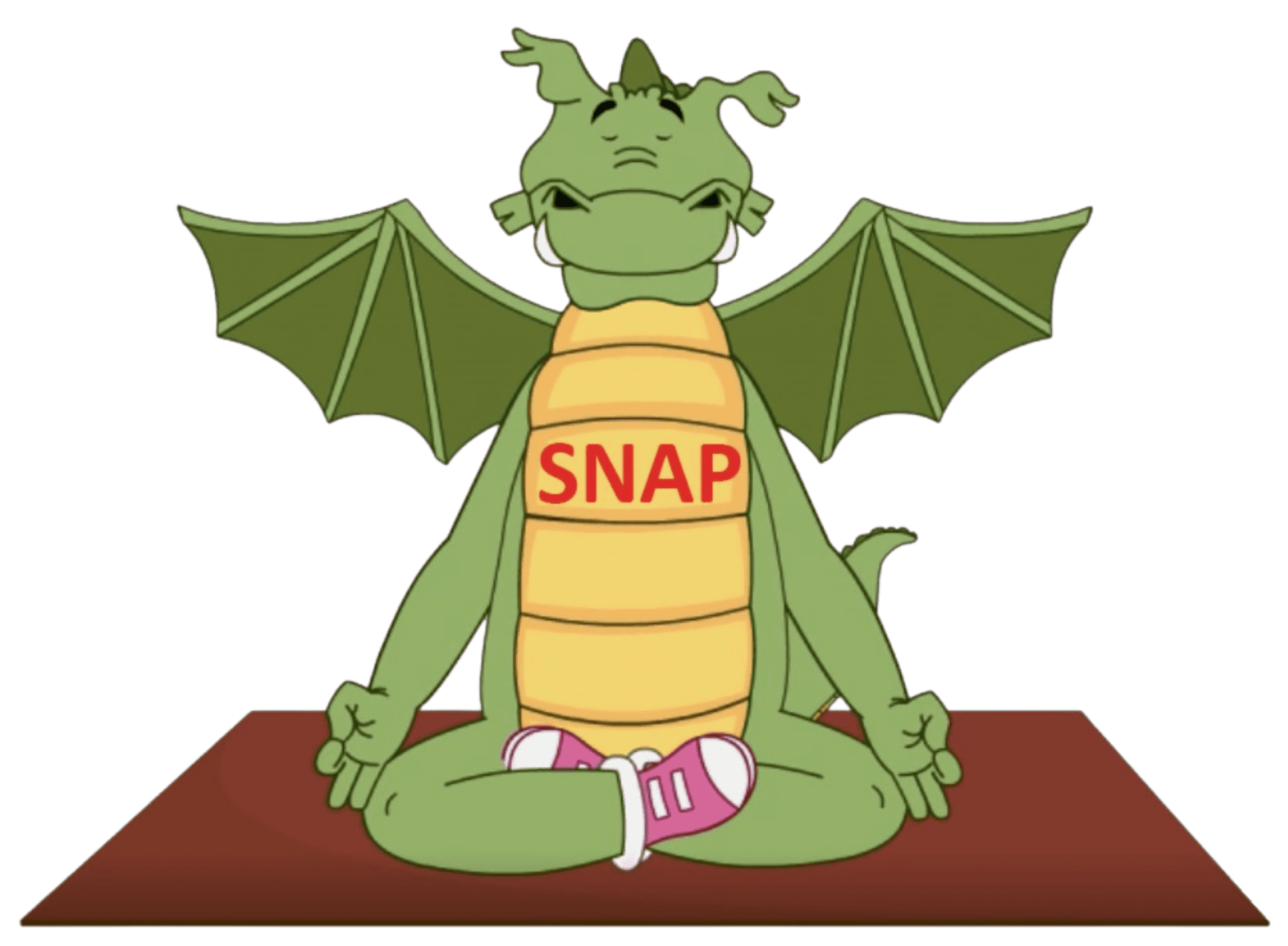
Six free games that practice the same skills SNAP® teaches, badges to collect, and a dragon who turns up everywhere. No sign-up, no grown-up required. Hand them your phone.

More Tools in The Feelings Corner
SNAP® teaches children to notice a feeling before it takes over. The Feelings Corner is where that practice continues between sessions, with free interactive tools built for every age, plus guides for the adults supporting them.
Featuring 20 feeling faces drawn by our own artist, Elizabeth.
Big friendly faces, a breathing bubble, and gentle co-regulation. No reading needed.
Explore → Ages 7–11The Feelings Detective, a feelings thermometer, the Calm-Down Lab, and a memory match game.
Explore → Ages 10–13Tools for the in-between years, when feelings get bigger and harder to explain.
Explore → Ages 14–17Straight talk and real strategies, with no lecturing. Built for teens to use on their own.
Explore → Parents & CaregiversWhat to say and what to do when a feeling gets big, across all 20 feelings.
Explore → ProfessionalsA clinical quick reference for therapists, social workers, and pediatricians.
Explore →Free for Families, Because of Them
Not one family pays for SNAP®. That is possible because of public investment in prevention, and because Center for Child Counseling is licensed and trained to deliver the program exactly as it was designed.

Our direct funding partner for SNAP®, connecting a statewide network of providers that keep young people out of the justice system and at home with their families.
Visit floridanetwork.org
State funding flows through the Florida Network to prevention and early intervention programs like SNAP®, reaching children long before the justice system would.
Visit djj.state.fl.us
Local investment that keeps SNAP® groups running in the neighborhoods where families already live, learn, and get care.
Visit pbc.gov
SNAP® was created in 1985 by the Child Development Institute in Toronto and is now delivered around the world. As a licensed affiliate, our team is trained and supported to run SNAP® with full fidelity to the model, which is what makes the research results hold up here in Palm Beach County.
Learn about the SNAP® modelSNAP® is a registered trademark of the Child Development Institute and is delivered here under license.
You Don't Have to Wait for It to Get Worse
SNAP® was built for the moment you're in right now, before a hard year at school becomes a hard decade. There is no cost, no waitlist fee, and no requirement that anything has gone officially wrong.
Tell us a little about your child and someone from our team will reach out to talk through whether SNAP® is the right fit. You are not committing to anything by asking.
I'm Interested →Counselors, teachers, pediatricians, case managers, and community partners can refer directly. We follow up with the family and keep you in the loop on next steps.
Make a Referral →If you want to understand how the groups work, what is expected of parents, or whether your child is a fit, reach out and ask. A real person will answer.
Contact Our Team →SNAP® groups are offered across Palm Beach County at no cost to families, funded by the Florida Network of Youth and Family Services and the Palm Beach County Youth Services Department. Want to keep practicing at home in the meantime? Visit the Dragon's Corner or The Feelings Corner.
If you are worried about your child's immediate safety, call or text 988 to reach the Suicide and Crisis Lifeline, or call 911 in an emergency.