
Childhood Trauma is Linked to Long-Term Health Issues

fighting aces little boy with stethoscopeMany of us experienced some type of highly stressful or traumatic event in our childhood. We may have had effective “buffers”: people like a trusted teacher, coach, therapist, or supportive family and friends. Or, depending on our age at the time, we may have decided we could handle our reactions on our own.

But, are you aware of the lifelong physical health issues scientists have found to be associated with Adverse Childhood Experiences, or ACEs? Take our quick questionnaire to find out your ACEs score, then come back here to learn what it might mean for your physical health.

ACEs are the single greatest unaddressed public health threat facing our nation today.
- Dr. Robert Block, former president of the American Academy of Pediatrics

ACEs threaten public health

Research by Kaiser Permanente and the Centers for Disease Control showed that ACEs scores are correlated with health outcomes. Children and adults with high scores (4 or more) are:

adverse childhood experiences lead to health conditions

“Children are especially sensitive to repeated stress activation because their brains and bodies are just developing,” said Dr. Nadine Burke Harris, pediatrician, in a 2014 TEDMED talk. “High doses of adversity not only affect brain structure and function, it also affects the developing immune system, developing hormonal systems, and even the way our DNA is read and transcribed.”

The need for routine screening and early intervention through play therapy, mental health services, child-parent psychotherapy, trauma-focused cognitive behavioral therapy, and positive parenting programs is evident. “ACEs are the single greatest unaddressed public health threat facing our nation today,” said Dr. Robert Block, former president of the American Academy of Pediatrics.

How can we intervene?

Abuse and neglect don’t discriminate. Neither do behavior issues or family dysfunction. But by helping children heal, each of us can stop the ongoing, repeated cycle of abuse and adversity.

Public awareness and education expands the ability and capacity for the entire community, including schools, organizations and businesses, to respond to the needs of children exposed to early adversity. In Palm Beach County, anyone who knows and cares about a child who has experienced ACEs can turn to the Center for Child Counseling.

Our mission is to foster healthy, resilient children and families through support, counseling, and awareness. In the next year, we will train 3,000 pediatricians, nurses, teachers, caregivers, police officers, and mental-health professionals to recognize the signs of ACEs.

Children deserve to live their lives free of abuse. We owe them a sense of security whether they’re at home or out in the world.

The Center for Child Counseling provides healing care to more than 2,400 children each year. Interested in learning how you can help fight childhood adversity in your community? Sign up to receive newsletter updates.


Sign up now for news, events, and education about Adverse Childhood Experiences (ACEs) and promoting resilience.


By submitting this form, you are consenting to receive emails from: Center for Child Counseling, 8895 N. Military Trail, Palm Beach Gardens, FL, 33410. You can revoke your consent to receive emails at any time by using the SafeUnsubscribe® link, found at the bottom of every email.

How Play Therapy Can Help Heal Childhood Trauma

Boy in Play Therapy for Childhood Trauma

At his first appointment at the Center for Child Counseling for childhood trauma, 8-year-old Thomas* asked his trauma therapist if she “liked to hurt kids, too.”

Thomas had been bullied and physically abused by a much-older stepbrother. Often, young children cannot explain or even understand what’s bothering them and they may struggle to verbally express themselves. Their language is play. Stressful or traumatic events – referred to as Adverse Childhood Experiences, or ACEs – can become evident through the way a child chooses to play.

What are Adverse Childhood Experiences?

ACEs are situations where a child faces some sort of trauma or stress. They typically fall into three categories:

  • Abuse – physical, emotional, sexual
  • Neglect – physical or emotional
  • Household dysfunction – parents facing incarceration, separation, divorce, mental illness, domestic abuse, substance abuse.

Nationally, the most common ACEs children face arise from:

  • Economic hardship
  • Issues associated with divorce
  • Witnessing or being a victim of violence (including domestic violence)
  • Living with someone who suffers from mental illness
  • Living with someone with drug or alcohol addiction
  • Issues associated with the incarceration of a parent or caregiver

The result of these situations? Insecurity from the constant threat of the unknown and anxiety associated with feelings that a caregiver may not be reliable.

The prevalence of these situations for our children is alarming: It’s estimated that nearly half of U.S. children (45%) have experienced at least one ACE, while one in 10 (10%) have experienced at least three of these traumatic events.

The potential damage to a child may seem obvious, but in reality, ACEs are incredibly complex and may not manifest the same way in every child. This makes diagnosing and fighting ACEs a challenge; two children who suffer the same sort of emotional abuse may act out quite differently.

How do we help a child with ACEs?

Because every child is unique, only an individualized treatment strategy can give them the best chance of working through their ACEs. The strategy begins with a questionnaire that helps therapists score and assess their mental and physical health.

Questions include:

  • Did a parent or other adult in your house often push, grab, slap or throw something at you? Did a parent or other adult in your house ever hit you so hard that you had marks or were hurt?
  • Was someone in your house depressed or mentally ill? Or did someone attempt suicide?
  • Did you often feel that you didn’t have enough to eat, had to wear dirty clothes, or had no one to protect you?

With these answers, qualified counselors like those at the Center for Child Counseling can start children on a healing journey that will improve their mental and physical health throughout their lives.

After six months of trauma therapy, Thomas is now able to express his feelings about the violence and abuse he experienced in his home through play therapy.

He is learning that most adults can be trusted and don’t hurt children.

You can learn more about the lifelong physical health issues associated with ACEs in our next blog. For now, equip yourself with knowledge by taking the quick ACEs questionnaire to learn what impact ACEs may have had on your life.

The Center for Child Counseling provides healing care to more than 2,400 children each year.
Interested in learning how you can help fight childhood adversity in your community? Sign up below to receive ACEs updates.

Sign up now for news, events, and education about Adverse Childhood Experiences (ACEs) and promoting resilience.


By submitting this form, you are consenting to receive emails from: Center for Child Counseling, 8895 N. Military Trail, Palm Beach Gardens, FL, 33410. You can revoke your consent to receive emails at any time by using the SafeUnsubscribe® link, found at the bottom of every email.

Leading the Fight Against Childhood Adversity and Trauma

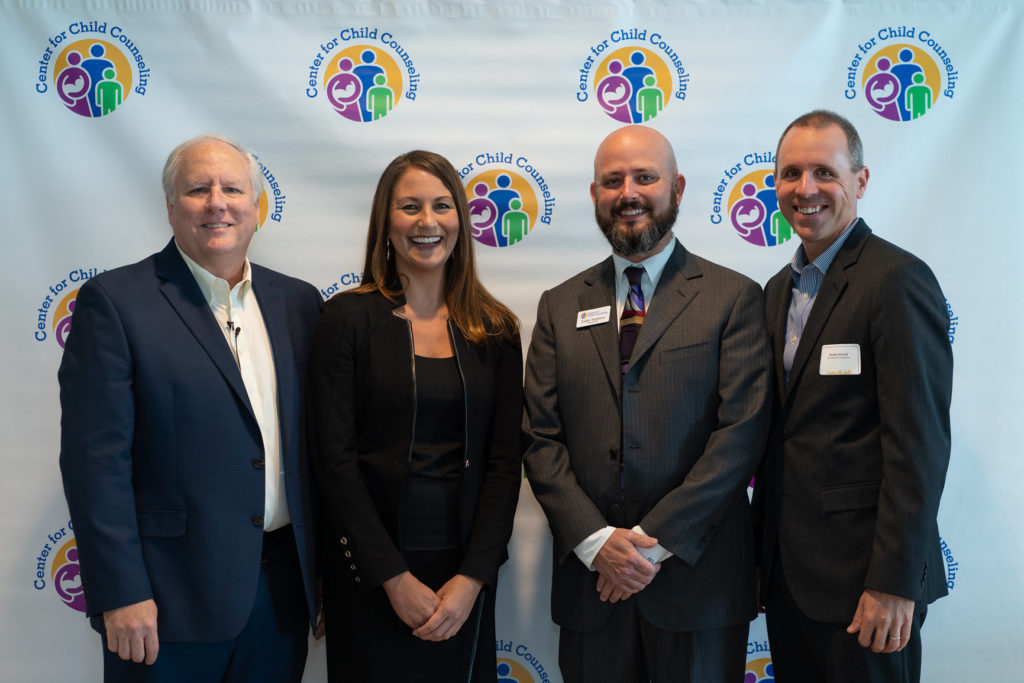
Dr. Blakely, Dr. Baganz, Eddie Stephens, and Randy Scheid, VP at Quantum Foundation.

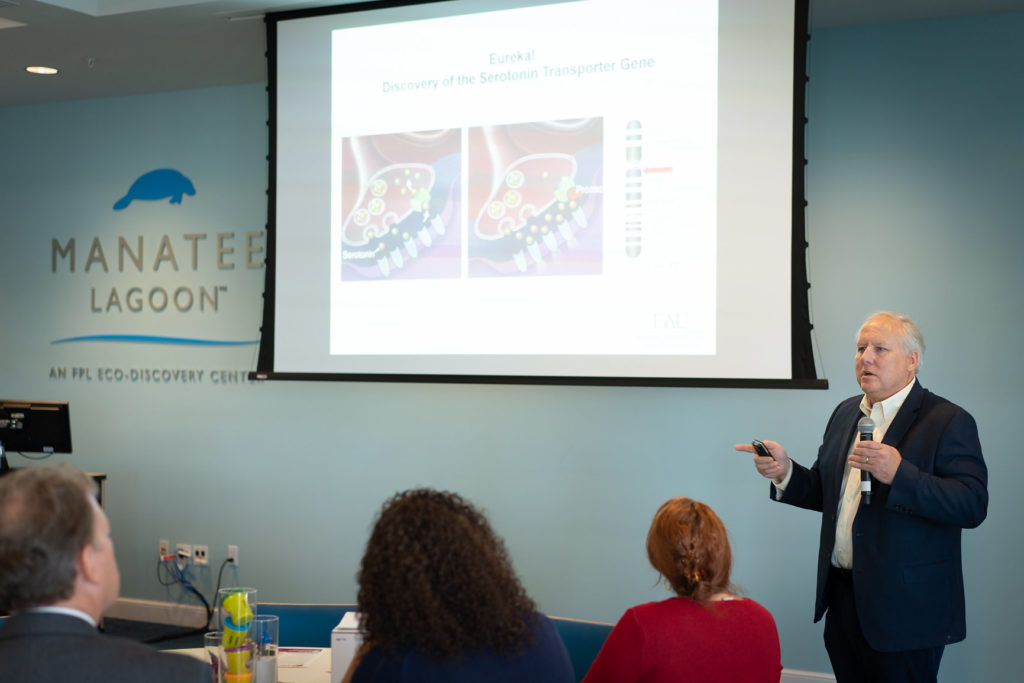
The single most pressing problem affecting societal wellness” — that was how speakers described ACEs (Adverse Childhood Experiences) at the 2nd Annual “Lead the Fight” event hosted by the Center for Child Counseling at FPL’s Manatee Lagoon Discovery Center in Riviera Beach in April. The event brought together dozens of local business and community leaders, including the mayors of West Palm Beach, Boynton Beach, Wellington and Jupiter, and the Vice Mayor of Royal Palm Beach, as well as Palm Beach County School District 4 Board Member Erica Whitfield, and the senior management of local health funders and law firms.

The Center for Child Counseling, a nonprofit based in Palm Beach County, offers mental health services to children from birth to 18, specializing in helping to heal young children exposed to trauma. The organization has emerged as the local leader in the fight against ACEs and is driving an awareness campaign focused on training teachers, healthcare providers, and community leaders to view their interactions with people, especially children, through a trauma-informed lens.

The Center’s CEO, Renée Layman, describes the effect of ACEs. “Children interpret experiences differently and we know that unless they’re able to process those experience - especially adverse ones - in a constructive way, the result can be a lifetime of mental and physical health issues.” In recent years, scientific research has shown that adverse experiences and trauma affect not only mental health but the physiological development of a young child’s brain.

The event’s keynote speakers from the FAU Brain Institute, Dr. Randy Blakey and Dr. Nicole Baganz, spoke about these early changes to a crowd of more than 125 guests. We tend to think that issues affecting the brain may have obvious consequences for mental health but, in fact, many diseases like diabetes, obesity, and substance abuse are linked to higher ACEs scores. Dr. Blakely talks about the impact of ACEs “Increasingly we recognize the powerful, enduring effects of early life experience, whether constituting risk for, or resiliency against, brain disorders and mental illness. The deeper we understand the biology surrounding these effects, the more we appreciate the influence of friends, family, and community.”

Members of the Board of the Center for Child Counseling, Bill Lynch and Eddie Stephens, spoke of their personal experiences and ACEs expert, Amber Payne, asked attendees to consider the economic impact ACEs have on the community. They contribute dramatically to depression, substance abuse, and other issues that result in lower productivity. Ms. Payne explains: “We know that without help and positive buffers, the changes in a child’s growing brain will have a profound effect on the rest of their lives. In fact, people with an ACEs score of 4 or higher live, on average, 20 years less than those without ACEs.”

Renée Layman encouraged the room to take advantage of the Center’s training opportunities. “We want people to know their ACE score and understand the implications of that score. Knowledge is power,” she said. “At the Center for Child Counseling, we’re partnering with numerous local agencies including Quantum Foundation and Children’s Services Council of Palm Beach County to spearhead this crucial awareness effort in Palm Beach County”.

To learn more about ACEs, the Center’s work, or to take the quick 10-question ACEs test, visit:

www.centerforchildcounseling.org/about-us/fightingACEs

Social media & sharing icons powered by UltimatelySocial